
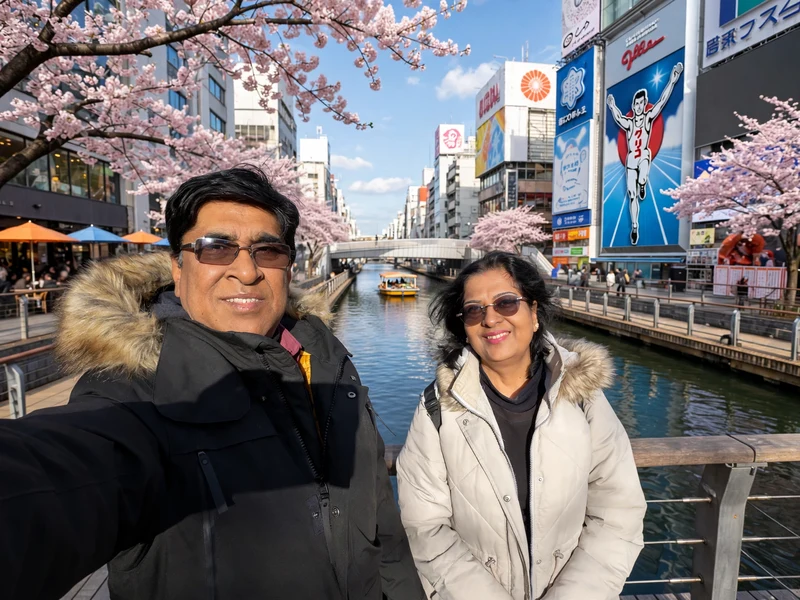
Planning a trip to Osaka, Japan? This complete Osaka travel guide covers the best places to visit in Osaka, attraction admission fees, opening hours, transport, food, travel costs, the best time to visit, shopping, photography spots and a practical 5-day itinerary. Discover Osaka Castle, Dotonbori, Universal Studios Japan, Osaka Aquarium Kaiyukan, Umeda Sky Building, Minoh Falls and day trips to Nara, Kyoto, Kobe and Himeji. The 25 places are arranged as a GlimpseTrip editorial priority list for first-time visitors—not as a statistically verified popularity ranking.
🎧 Listen to Our Osaka Travel Podcast
Planning a trip to Osaka, Japan? Join GlimpseTrip on an exciting audio journey through 25 amazing attractions in Osaka and nearby Kansai. Discover famous landmarks, historic temples, vibrant shopping streets, delicious local food and unforgettable day trips to Nara, Kyoto, Kobe and Himeji. Listen to our podcast for travel inspiration and useful tips before exploring our complete Osaka travel guide.
Osaka at a Glance
| Country | Japan |
| 📍 Location | Osaka City, Osaka Prefecture, Kansai (Kinki) region, Honshu, Japan |
| 👥 Population | Osaka City: 2,811,565 (1 July 2025); Osaka Prefecture: 8,770,315 (1 October 2024; latest figures cited in the source guide). |
| 💰 Currency | Japanese Yen (JPY / ¥). Exchange rates fluctuate; check a live converter on the day of travel. |
| 🛕 Religion | Shinto and Buddhism are Japan’s principal historical religious traditions. Religious practice is diverse and often expressed through customs, shrine and temple visits, and festivals. |
| 🗣️ Language | Japanese; English signage is common at major stations and tourist attractions, but less consistent in neighbourhoods. |
| 🕐 Stay | 3 full days for Osaka’s main city highlights; 4–5 days if including Universal Studios Japan and day trips around Kansai. |
| 🌤️ Best time | Spring (March–May) and autumn (October–November) for comfortable sightseeing; summer is hot and humid. |
| ✈️ Airports | Kansai International Airport (KIX) is the main international gateway; Osaka Itami (ITM) mainly handles domestic flights. |
| 🚆 Getting around | Osaka Metro, JR West, Hankyu, Hanshin, Keihan, Nankai, buses, walking and taxis; ICOCA and compatible IC cards are widely useful. |
Is Osaka Worth Visiting?
Absolutely. Osaka offers a different atmosphere from Kyoto’s temple districts and Tokyo’s scale: it is sociable, food-focused, energetic and easy to explore by rail. Plan at least three full days for the city itself, and add two or more days if you want excursions to Nara, Kyoto, Kobe or Himeji. Osaka is also a convenient base for travellers who prefer to stay in one hotel while exploring Kansai.
📋 Osaka & Nearby Kansai – Attractions at a Glance
| Attraction | Ticket (adult) | Hours | Time | Best For |
|---|---|---|---|---|
| 1. Osaka Castle & Osaka Castle Park | Adults ¥1,200; university/high-school students ¥600; junior-high and younger free (official listing checked Nov 2026). Park grounds are free. | Castle museum: generally 9:00–18:00; last admission 30 minutes before closing. New Year closure; confirm special closures. | 2–3 hours; morning for fewer crowds. | A landmark of Japan’s unification era, with a striking reconstructed keep, extensive stone walls, moats and seasonal gardens. |
| 2. Dotonbori & the Glico Running Man | Free to walk around; food, cruises and venues are charged separately. | Outdoor district; accessible at all hours. Individual shops and restaurants set their own hours. | 1–2 hours; evening for illuminated signs. | Osaka’s best-known neon-lit canal district, famous for its giant signs, street food, bridges and lively evening atmosphere. |
| 3. Universal Studios Japan | Date-based ticket prices vary; Studio Pass and Express Pass are separate products. | Opening and closing times vary by date; check the official calendar. | Full day; arrive before opening. | A major movie-themed park with themed lands, rides and seasonal events, including Super Nintendo World; reserve a full day. |
| 4. Osaka Aquarium Kaiyukan | Date-dependent admission; adult, child and senior rates vary by age and date. | Hours vary by date and season; check the official calendar before visiting. | 2–3 hours; weekdays are often less crowded. | One of Japan’s best-known aquariums, arranged around a central Pacific Ocean tank and marine habitats. |
| 5. Umeda Sky Building – Kuchu Teien Observatory | Paid admission; current adult and child rates are listed on the official site. | Check the official observatory hours; last admission is before closing. | 60–90 minutes; sunset into evening. | A distinctive twin-tower skyscraper connected by a rooftop observatory with wide city views. |
| 6. Shinsaibashi-suji Shopping Street | Free entry; shopping and food costs vary. | Arcade is publicly accessible; individual shops generally open late morning to evening. | 1–2 hours; allow longer for shopping. | A long covered shopping arcade with fashion, cosmetics, souvenirs, department stores and local eateries. |
| 7. Kuromon Ichiba Market | Free entry; food is purchased from individual vendors. | Most stalls operate during daytime; individual hours and closing days vary. | 1–1.5 hours; late morning. | A lively food market known for seafood, fruit, grilled snacks and Osaka ingredients; a good place to sample small portions. |
| 8. Shinsekai & Tsutenkaku Tower | General observatory adult ¥1,500; optional attractions cost extra (official listing checked Nov 2026). | Tsutenkaku general observatory listed as 9:00–21:45, last entry 21:15; check official site for special facilities. | 1.5–2 hours; late afternoon/evening. | A retro entertainment district with colourful signs, kushikatsu restaurants and the iconic Tsutenkaku observation tower. |
| 9. Shitennoji Temple | Main temple adults ¥500; Treasure Museum and garden have separate admission (official listing checked Nov 2026). | Main precinct generally 8:30–16:30 (Apr–Sep) and 8:30–16:00 (Oct–Mar); some areas differ. | 1–1.5 hours; morning. | A historic Buddhist temple traditionally associated with Prince Shotoku and among Japan’s early state-sponsored temples. |
| 10. Abeno Harukas 300 Observatory | Paid admission; online and same-day prices may differ. | Check the official observatory hours and last admission. | 1–2 hours; sunset or night views. | A high-rise observation deck with panoramic views from one of Osaka’s tallest buildings; the complex also has a department store and art museum. |
| 11. Sumiyoshi Taisha Shrine | Shrine grounds free; special events or services may have charges. | Shrine grounds open daily; worship facilities and office hours vary by season. | 45–90 minutes; early morning. | A major Shinto shrine known for its distinctive Sumiyoshi-zukuri architecture and graceful arched Sorihashi Bridge. |
| 12. Osaka Museum of History | Paid permanent exhibition; concessions and special exhibition prices vary. | Typically 9:30–17:00; closed Tuesdays (or following day if holiday) and New Year; confirm calendar. | 1.5–2 hours. | A modern museum explaining Osaka’s development from ancient Naniwa to the modern commercial city, with views towards Osaka Castle. |
| 13. Nakanoshima Park & Osaka Central Public Hall | Park is free; guided tours or events may require payment. | Park is open access; hall tours and interior access depend on events and schedules. | 1–2 hours; spring rose season or evening. | A pleasant riverside island district with rose gardens, historic architecture, cafés and the photogenic Central Public Hall. |
| 14. Tempozan Ferris Wheel | Paid ride; ticket and cabin options vary. | Hours vary by day and season; check operator’s calendar. | 30–60 minutes; late afternoon/evening. | A large waterfront Ferris wheel offering views over Osaka Bay, the harbour and nearby city landmarks. |
| 15. Expo ’70 Commemorative Park & Tower of the Sun | Park admission is paid; Tower of the Sun and museums require separate timed tickets. | Park is generally 9:30–17:00; closed Wednesdays (or following day if holiday) and year-end; seasonal exceptions apply. | 3–5 hours. | A vast park built on the former 1970 World Expo site, with gardens, museums, seasonal flowers and Taro Okamoto’s Tower of the Sun. |
| 16. Cup Noodles Museum Osaka Ikeda | Museum admission free; make-your-own cup noodle activity and workshops are charged. | Generally 9:30–16:30, last entry 15:30; closed Tuesdays and year-end/New Year (check calendar). | 1.5–2.5 hours. | An interactive museum celebrating instant ramen, with exhibits on its history and a workshop to design a personalised cup noodle. |
| 17. Minoh Falls & Minoh Park | Free admission to the park and waterfall. | Open-air nature area; trail access may be affected by weather or maintenance. | 2–3 hours return walk; allow extra time for stops. | A scenic forest walk to a 33-metre waterfall, especially attractive during autumn foliage season. |
| 18. Katsuoji Temple | Admission charged; current adult/child rates and any online reservation rules must be checked. | Hours and access arrangements vary by season and day; consult official visitor information. | 1.5–2 hours. | A mountain temple famous for its thousands of red daruma dolls, peaceful grounds and seasonal foliage. |
| 19. NIFREL & EXPOCITY | NIFREL admission is paid; complex entry is generally free. | NIFREL hours vary by date; EXPOCITY shops and restaurants have separate hours. | 2–3 hours for NIFREL; longer with shopping. | An interactive living museum blending animals, aquatic life and art, located within the large EXPOCITY leisure and shopping complex. |
| 20. Sakai – Mozu Kofun Group (Daisenryo Kofun area) | Many exterior viewpoints are free; Sakai City Museum charges admission. | Outdoor viewpoints are accessible; museum hours and closing days vary. | 2–3 hours. | A UNESCO-listed cluster of ancient keyhole-shaped burial mounds, best understood from the observation points and nearby museums. |
| 21. Sakai Traditional Crafts & Knife Culture | Some museums are free; workshops, demonstrations and purchases are charged. | Venue hours and workshop schedules vary; check before visiting. | 2–3 hours. | Explore Sakai’s long craft tradition, including forged knives, tea ceremony culture and the historic merchant town. |
| 22. Nara Park & Todai-ji Temple (Day Trip) | Park is free; Todai-ji Great Buddha Hall has paid admission; verify current rate. | Park is open access; Todai-ji hours vary seasonally. | Full day or 5–7 hours. | A classic Kansai excursion combining free-roaming deer, landscaped parkland and the Great Buddha housed in Todai-ji’s monumental hall. |
| 23. Kyoto – Fushimi Inari Taisha (Day Trip) | Free entry to shrine grounds; optional experiences may cost extra. | Shrine grounds are accessible around the clock; facilities and shops have their own hours. | 2–4 hours; longer for full summit hike. | A memorable shrine walk through thousands of vermilion torii gates on wooded Mount Inari; a rewarding excursion from Osaka. |
| 24. Kobe – Harborland & Meriken Park (Day Trip) | Waterfront stroll is free; towers, museums and attractions charge separately. | Open-air waterfront is accessible all day; individual attractions have their own hours. | Half to full day; evening views are excellent. | A waterfront district with the Port Tower, maritime museums, shopping, restaurants and attractive night views. |
| 25. Himeji Castle (Day Trip) | Paid admission; rates may change; check official ticket page before travel. | Usually 9:00–17:00 (last entry 16:00); seasonal changes and closure days should be checked. | Half to full day including travel. | One of Japan’s most celebrated original castles and a UNESCO World Heritage Site, renowned for its white exterior and complex defensive design. |
Important: Ticket prices and opening hours are planning references from the detailed guide and may change. Attractions in Osaka and the wider Kansai region can have seasonal schedules, special-event rates or temporary closures. Always confirm the linked official website before visiting.
🏛️ TOP 25 TOURIST ATTRACTIONS – DETAILED GUIDE
1. Osaka Castle & Osaka Castle Park

⭐ Why Visit? A landmark of Japan’s unification era, with a striking reconstructed keep, extensive stone walls, moats and seasonal gardens.
What to See & Do: Visit the reconstructed castle keep and its museum exhibits, walk around the impressive moats and stone walls, and explore Osaka Castle Park. Nishinomaru Garden is especially attractive during cherry-blossom season.
Pro Tip: Allow time for the park and moat as well as the museum; elevators can be busy.
📍 Location: Chuo-ku, Osaka | Google Maps
🚆 How to Reach: Osakajokoen Station (JR) or Tanimachi 4-chome / Morinomiya (Osaka Metro).
⏰ Hours: Castle museum: generally 9:00–18:00; last admission 30 minutes before closing. New Year closure; confirm special closures.
🎟️ Ticket: Adults ¥1,200; university/high-school students ¥600; junior-high and younger free (official listing checked Nov 2026). Park grounds are free.
⏱️ Time: 2–3 hours; morning for fewer crowds.
🔗 Official Information: Osaka Castle official website
📸 Photo Album: View photos of Osaka Castle & Osaka Castle Park
2. Dotonbori & the Glico Running Man

⭐ Why Visit? Osaka’s best-known neon-lit canal district, famous for its giant signs, street food, bridges and lively evening atmosphere.
What to See & Do: Photograph the famous Glico Running Man sign from Ebisubashi Bridge, stroll along the canal, browse the neon-lit streets, sample takoyaki and okonomiyaki, and consider an evening canal cruise.
Pro Tip: Visit both sides of the canal and the Ebisu Bridge; expect crowds at peak times.
📍 Location: Namba, Chuo-ku, Osaka | Google Maps
🚆 How to Reach: A short walk from Namba, Osaka-Namba or Shinsaibashi stations.
⏰ Hours: Outdoor district; accessible at all hours. Individual shops and restaurants set their own hours.
🎟️ Ticket: Free to walk around; food, cruises and venues are charged separately.
⏱️ Time: 1–2 hours; evening for illuminated signs.
🔗 Official Information: Osaka official tourism – Dotonbori
📸 Photo Album: View photos of Dotonbori & the Glico Running Man
3. Universal Studios Japan

⭐ Why Visit? A major movie-themed park with themed lands, rides and seasonal events, including Super Nintendo World; reserve a full day.
What to See & Do: Plan your day around the themed lands and major rides, especially Super Nintendo World and The Wizarding World of Harry Potter. Check timed-entry requirements, show schedules and ride restrictions before arrival.
Pro Tip: Timed-entry rules may apply to popular areas; buy only through official channels or authorised sellers.
4. Osaka Aquarium Kaiyukan

⭐ Why Visit? One of Japan’s best-known aquariums, arranged around a central Pacific Ocean tank and marine habitats.
What to See & Do: Follow the aquarium’s route around the enormous Pacific Ocean tank and see marine life from the surrounding habitats. Allow time for the smaller exhibits and the Tempozan waterfront nearby.
Pro Tip: Combine with Tempozan Ferris Wheel and the harbour area.
5. Umeda Sky Building – Kuchu Teien Observatory

⭐ Why Visit? A distinctive twin-tower skyscraper connected by a rooftop observatory with wide city views.
What to See & Do: Ride up to the Floating Garden Observatory, walk across the open-air rooftop viewing area and enjoy the city panorama. Sunset and after-dark views are particularly memorable.
Pro Tip: Allow time to find the underground access route from Osaka Station.
📍 Location: Kita-ku, Osaka | Google Maps
🚆 How to Reach: About 7–10 minutes’ walk from JR Osaka Station / Umeda area.
⏰ Hours: Check the official observatory hours; last admission is before closing.
🎟️ Ticket: Paid admission; current adult and child rates are listed on the official site.
⏱️ Time: 60–90 minutes; sunset into evening.
🔗 Official Information: Official Umeda Sky Building
📸 Photo Album: View photos of Umeda Sky Building – Kuchu Teien Observatory
6. Shinsaibashi-suji Shopping Street

⭐ Why Visit? A long covered shopping arcade with fashion, cosmetics, souvenirs, department stores and local eateries.
What to See & Do: Walk the covered arcade from Shinsaibashi towards the Dotonbori area, browse fashion, cosmetics and souvenir shops, and explore the connected department stores and side streets.
Pro Tip: Connect the visit with Dotonbori and Amerikamura on foot.
7. Kuromon Ichiba Market

⭐ Why Visit? A lively food market known for seafood, fruit, grilled snacks and Osaka ingredients; a good place to sample small portions.
What to See & Do: Browse the seafood, produce and speciality-food stalls, and try freshly prepared local snacks from vendors. Check prices before ordering and follow each stall’s guidance on where food may be eaten.
Pro Tip: Check prices before ordering seafood; ask about allergens and raw-food handling.
📍 Location: Nipponbashi, Chuo-ku, Osaka | Google Maps
🚆 How to Reach: Nippombashi Station, Osaka Metro / Kintetsu.
⏰ Hours: Most stalls operate during daytime; individual hours and closing days vary.
🎟️ Ticket: Free entry; food is purchased from individual vendors.
⏱️ Time: 1–1.5 hours; late morning.
🔗 Official Information: Official Kuromon Market
📸 Photo Album: View photos of Kuromon Ichiba Market
8. Shinsekai & Tsutenkaku Tower

⭐ Why Visit? A retro entertainment district with colourful signs, kushikatsu restaurants and the iconic Tsutenkaku observation tower.
What to See & Do: Explore the retro streets around Tsutenkaku, visit the tower’s observation areas and look for the Billiken figure. Continue through Janjan Yokocho for the area’s famous kushikatsu restaurants.
Pro Tip: Try kushikatsu, follow local dining etiquette and avoid dipping food twice in shared sauce.
📍 Location: Naniwa-ku, Osaka | Google Maps
🚆 How to Reach: Ebisucho Station, Dobutsuen-mae Station or Shin-Imamiya Station.
⏰ Hours: Tsutenkaku general observatory listed as 9:00–21:45, last entry 21:15; check official site for special facilities.
🎟️ Ticket: General observatory adult ¥1,500; optional attractions cost extra (official listing checked Nov 2026).
⏱️ Time: 1.5–2 hours; late afternoon/evening.
🔗 Official Information: Official Tsutenkaku Tower
📸 Photo Album: View photos of Shinsekai & Tsutenkaku Tower
9. Shitennoji Temple

⭐ Why Visit? A historic Buddhist temple traditionally associated with Prince Shotoku and among Japan’s early state-sponsored temples.
What to See & Do: Explore the temple precinct, central gate, five-storey pagoda area and traditional garden. Check whether the inner precinct, treasure house or garden requires a separate admission ticket.
Pro Tip: Dress respectfully and check access to the pagoda and special exhibition areas.
📍 Location: Tennoji-ku, Osaka | Google Maps
🚆 How to Reach: Shitennoji-mae Yuhigaoka Station, Osaka Metro Tanimachi Line.
⏰ Hours: Main precinct generally 8:30–16:30 (Apr–Sep) and 8:30–16:00 (Oct–Mar); some areas differ.
🎟️ Ticket: Main temple adults ¥500; Treasure Museum and garden have separate admission (official listing checked Nov 2026).
⏱️ Time: 1–1.5 hours; morning.
🔗 Official Information: Official Shitennoji Temple
📸 Photo Album: View photos of Shitennoji Temple
10. Abeno Harukas 300 Observatory

⭐ Why Visit? A high-rise observation deck with panoramic views from one of Osaka’s tallest buildings; the complex also has a department store and art museum.
What to See & Do: Visit the Harukas 300 observation floors for elevated views across Osaka, then explore the building’s department stores and art museum if time permits.
Pro Tip: Combine with Tennoji Park, Shitennoji or the zoo.
11. Sumiyoshi Taisha Shrine

⭐ Why Visit? A major Shinto shrine known for its distinctive Sumiyoshi-zukuri architecture and graceful arched Sorihashi Bridge.
What to See & Do: Walk across the distinctive arched Sorihashi Bridge, visit the shrine’s main halls and admire its ancient Sumiyoshi-zukuri architectural style. Take time to explore the peaceful grounds.
Pro Tip: Walk across the iconic bridge carefully; festival days can be crowded.
12. Osaka Museum of History

⭐ Why Visit? A modern museum explaining Osaka’s development from ancient Naniwa to the modern commercial city, with views towards Osaka Castle.
What to See & Do: Follow the museum’s exhibits through the city’s development from ancient Naniwa to modern Osaka. Look out for the upper-floor views towards Osaka Castle and the surrounding historic area.
Pro Tip: Pair with Osaka Castle; upper-floor windows offer a memorable castle view.
13. Nakanoshima Park & Osaka Central Public Hall

⭐ Why Visit? A pleasant riverside island district with rose gardens, historic architecture, cafés and the photogenic Central Public Hall.
What to See & Do: Walk along the riverside paths, enjoy the seasonal rose garden and admire the red-brick architecture of Osaka Central Public Hall. The island is especially pleasant for a relaxed city walk.
Pro Tip: A scenic walk between museums, cafés and the riverside.
14. Tempozan Ferris Wheel

⭐ Why Visit? A large waterfront Ferris wheel offering views over Osaka Bay, the harbour and nearby city landmarks.
What to See & Do: Take a ride for views over Osaka Bay, the harbour and the surrounding waterfront. Combine it with the nearby aquarium and Tempozan Marketplace for an easy half-day visit.
Pro Tip: Combine with Kaiyukan and Tempozan Marketplace.
15. Expo ’70 Commemorative Park & Tower of the Sun

⭐ Why Visit? A vast park built on the former 1970 World Expo site, with gardens, museums, seasonal flowers and Taro Okamoto’s Tower of the Sun.
What to See & Do: See Taro Okamoto’s striking Tower of the Sun, explore the spacious park and Japanese garden, and visit the Expo-related exhibits where open. Check seasonal flower displays and event schedules.
Pro Tip: Reserve Tower of the Sun entry in advance where required; the grounds are extensive.
16. Cup Noodles Museum Osaka Ikeda

⭐ Why Visit? An interactive museum celebrating instant ramen, with exhibits on its history and a workshop to design a personalised cup noodle.
What to See & Do: Explore the history of instant noodles, see the exhibits about Momofuku Ando and, if available, take part in the My CUPNOODLES Factory experience. Check activity reservations and operating arrangements in advance.
Pro Tip: Workshop slots can fill; check booking and same-day availability.
17. Minoh Falls & Minoh Park

⭐ Why Visit? A scenic forest walk to a 33-metre waterfall, especially attractive during autumn foliage season.
What to See & Do: Follow the riverside walking path through the forest to Minoh Falls, stopping at the bridges and seasonal viewpoints. In autumn, the coloured maple leaves are a major attraction.
Pro Tip: Wear comfortable shoes; the route is uphill and can be slippery after rain.
📍 Location: Minoh, Osaka Prefecture | Google Maps
🚆 How to Reach: Hankyu Minoh Station; follow the walking trail through the valley.
⏰ Hours: Open-air nature area; trail access may be affected by weather or maintenance.
🎟️ Ticket: Free admission to the park and waterfall.
⏱️ Time: 2–3 hours return walk; allow extra time for stops.
🔗 Official Information: Osaka official tourism – Minoh Park
📸 Photo Album: View photos of Minoh Falls & Minoh Park
18. Katsuoji Temple

⭐ Why Visit? A mountain temple famous for its thousands of red daruma dolls, peaceful grounds and seasonal foliage.
What to See & Do: Explore the hillside temple grounds, discover the many red daruma dolls placed by visitors and enjoy the wooded setting. Allow time for the slopes, steps and photo spots around the temple.
Pro Tip: Respect worship areas; check bus return times before entering the grounds.
19. NIFREL & EXPOCITY

⭐ Why Visit? An interactive living museum blending animals, aquatic life and art, located within the large EXPOCITY leisure and shopping complex.
What to See & Do: Explore NIFREL’s immersive exhibits combining elements of an aquarium, zoo and interactive museum, then browse the wider EXPOCITY complex for shopping, dining and entertainment.
Pro Tip: A good family option; check animal interaction rules and photography restrictions.
20. Sakai – Mozu Kofun Group (Daisenryo Kofun area)

⭐ Why Visit? A UNESCO-listed cluster of ancient keyhole-shaped burial mounds, best understood from the observation points and nearby museums.
What to See & Do: Learn about the enormous keyhole-shaped burial mounds and their place in Japan’s ancient history. Use the designated viewpoints and consider adding the Sakai City Museum to understand the UNESCO-listed Mozu-Furuichi heritage.
Pro Tip: The tomb interiors are not open to visitors; use the museum and designated viewpoints.
21. Sakai Traditional Crafts & Knife Culture

⭐ Why Visit? Explore Sakai’s long craft tradition, including forged knives, tea ceremony culture and the historic merchant town.
What to See & Do: Discover Sakai’s long-established knife-making tradition through local workshops, craft displays and specialist knife shops. Ask about demonstrations, sharpening services and visitor access before travelling.
Pro Tip: Check whether demonstrations or workshops require advance booking.
22. Nara Park & Todai-ji Temple (Day Trip)

⭐ Why Visit? A classic Kansai excursion combining free-roaming deer, landscaped parkland and the Great Buddha housed in Todai-ji’s monumental hall.
What to See & Do: Walk through Nara Park, observe the free-roaming deer respectfully and visit Todai-ji’s Great Buddha Hall. Allow extra time for the approach paths and nearby historic temple precincts.
Pro Tip: Do not feed deer anything other than designated deer crackers; secure maps and food.
📍 Location: Nara, Nara Prefecture | Google Maps
🚆 How to Reach: JR Nara or Kintetsu-Nara; Kintetsu station is closer to the main park sights.
⏰ Hours: Park is open access; Todai-ji hours vary seasonally.
🎟️ Ticket: Park is free; Todai-ji Great Buddha Hall has paid admission; verify current rate.
⏱️ Time: Full day or 5–7 hours.
🔗 Official Information: Official Todai-ji
📸 Photo Album: View photos of Nara Park & Todai-ji Temple (Day Trip)
23. Kyoto – Fushimi Inari Taisha (Day Trip)

⭐ Why Visit? A memorable shrine walk through thousands of vermilion torii gates on wooded Mount Inari; a rewarding excursion from Osaka.
What to See & Do: Walk through the famous vermilion torii gates, visit the main shrine and follow part of the forested Mount Inari trail. A longer walk reaches quieter viewpoints and smaller shrines.
Pro Tip: Go early or late to avoid the busiest lower paths; wear walking shoes.
📍 Location: Fushimi-ku, Kyoto | Google Maps
🚆 How to Reach: JR Inari Station is beside the main entrance; Keihan Fushimi-Inari is also nearby.
⏰ Hours: Shrine grounds are accessible around the clock; facilities and shops have their own hours.
🎟️ Ticket: Free entry to shrine grounds; optional experiences may cost extra.
⏱️ Time: 2–4 hours; longer for full summit hike.
🔗 Official Information: Official Fushimi Inari Taisha
📸 Photo Album: View photos of Kyoto – Fushimi Inari Taisha (Day Trip)
24. Kobe – Harborland & Meriken Park (Day Trip)

⭐ Why Visit? A waterfront district with the Port Tower, maritime museums, shopping, restaurants and attractive night views.
What to See & Do: Stroll the waterfront at Harborland and Meriken Park, see the BE KOBE monument and enjoy views of Kobe Port Tower and the harbour. Stay into the evening if you want to see the waterfront lights.
Pro Tip: Combine Harborland with Kitano or Nunobiki if you have a full day.
25. Himeji Castle (Day Trip)

⭐ Why Visit? One of Japan’s most celebrated original castles and a UNESCO World Heritage Site, renowned for its white exterior and complex defensive design.
What to See & Do: Explore the white castle complex, its gates, defensive passages and interior floors, then visit nearby Koko-en Garden if time allows. Wear comfortable shoes for steep stairs and uneven surfaces.
Pro Tip: Steep stairs and narrow passages inside; wear socks and travel light.
Interactive Map – Osaka & Nearby Kansai Attractions
Use the live Google map below to explore the Osaka region and see the locations for each of the 25 places in this guide.
How to Reach Osaka
By air: Kansai International Airport (KIX) is the principal international gateway. JR Haruka trains and Nankai Airport Express / Rapi:t services connect the airport with major Osaka hubs. Osaka International Airport (Itami, ITM) mainly handles domestic flights and connects by airport limousine bus and monorail.
By train: Shin-Osaka is the Shinkansen station, with connections to JR and Osaka Metro. Osaka Station / Umeda, Namba and Tennoji are other major hubs.
From Tokyo: Tokaido Shinkansen services run to Shin-Osaka; journey time depends on service type.
From Kyoto, Nara and Kobe: Frequent JR and private railway services connect the cities; compare departure stations and destinations as different operators use different terminals.
Airport links: Kansai International Airport official site | Osaka Itami Airport official site
Public Transportation in Osaka
Subway / Metro: Osaka Metro is the main urban subway network. The Midosuji Line connects Shin-Osaka, Umeda, Shinsaibashi, Namba and Tennoji. Click to see the Osaka Metro Route Map | Official Osaka Metro
Trains: JR West, Hankyu, Hanshin, Keihan, Kintetsu and Nankai serve Osaka and the wider Kansai region. Click to see the Osaka JR & Train Route Map | JR-WEST
Buses: City buses fill gaps between rail stations; check routes and payment methods before boarding.
IC cards: ICOCA and other compatible IC cards can be used on many trains, subways and buses across the region. Confirm coverage for special services.
Passes: Compare the Osaka Amazing Pass, Osaka e-Pass, Osaka Metro passes and regional rail passes against your planned itinerary. A pass is not automatically cheaper.
Official network guide: Osaka sightseeing transportation and route maps
People & Culture
Osaka is known for its warm, expressive city culture, humour, commerce and strong food identity. The local dialect, Osaka-ben, is part of the region’s character.
Remove shoes where indicated, queue patiently, keep phone calls quiet on public transport and avoid eating while walking where local signs discourage it. Respect shrine and temple customs.
Historical Information
Osaka has long been an important port and commercial centre. Its historic name, Naniwa, is associated with early Japanese political and trade history. Osaka Castle became a major symbol of Toyotomi Hideyoshi’s ambition in the late 16th century.
During the Edo period, Osaka developed as a major merchant city and was often described as the nation’s kitchen because of its role in rice distribution and trade. Modern Osaka grew into a major industrial, financial and cultural centre.
Major Festivals of Osaka
Tenjin Matsuri (24–25 July): One of Japan’s best-known festivals, featuring shrine rituals, processions, boats on the Okawa River and fireworks on the main day. Festival guide.
Sumiyoshi Matsuri (late July–early August): Traditional shrine festivities at Sumiyoshi Taisha; dates and programme vary.
Kishiwada Danjiri Festival (September and October): Famous wooden float processions in Kishiwada; exact dates differ by district. Official event information.
Osaka Castle and seasonal events: Cherry blossom, autumn foliage, illumination and food events take place at different venues; check current calendars.
Weather & Best Time to Visit
Osaka has four distinct seasons. Spring and autumn are generally the most comfortable sightseeing periods. Summer is hot, humid and can be rainy; winter is comparatively cool, with occasional cold spells.
Best overall: March–May and October–November for comfortable walking and seasonal scenery. Cherry blossom timing varies each year.
Summer: June is typically part of the rainy season; July and August are hot and humid. Carry water and plan indoor breaks.
Winter: December–February is cool; pack layers.
Weather source: Japan Meteorological Agency forecasts.
Osaka Weather Throughout the Year – Monthly Climate Guide
Typical pattern (climate guidance, not a forecast): January–February cool; March gradually milder; April–May pleasant and often suitable for outdoor sightseeing; June wetter with the rainy season; July–August hot and humid; September warm with possible typhoon impacts; October–November generally mild and comfortable; December cool. Check the Japan Meteorological Agency for current forecasts and typhoon advisories before travel.
Food & Cuisine
Takoyaki: Bite-sized octopus-filled batter balls, a signature Osaka street food.
Okonomiyaki: Savoury pancake commonly made with cabbage, batter and varied toppings.
Kushikatsu: Deep-fried skewers; follow each restaurant’s sauce-dipping rules.
Negiyaki: A savoury pancake featuring green onion.
Udon-suki: Hot-pot style udon dish associated with Osaka cuisine.
Osaka sushi: Try pressed box sushi and other local styles.
Where to sample: Dotonbori, Shinsekai, Kuromon Market and local shopping arcades. Official Osaka food guide.
Dietary note: Dashi often contains fish; ask about ingredients for vegetarian, vegan or allergy-sensitive meals.
Shopping – Things to Buy
Popular purchases include Japanese snacks, matcha sweets, takoyaki-flavoured souvenirs, stationery, cosmetics, character merchandise, kitchenware and Sakai-made knives.
Explore Shinsaibashi-suji, Namba, Umeda, Kuromon Market and Nipponbashi Den Den Town. For traditional crafts, consider Sakai’s knife and tea-related workshops.
Check tax-free eligibility, passport requirements, sealed-bag rules and customs allowances before buying.
Safety & Security
Osaka is a major urban destination. Use normal city precautions: keep valuables secure in crowded areas, check restaurant bills and prices, and take care around busy roads and nightlife districts.
Emergency numbers: Police 110; fire and ambulance 119. For language assistance, ask hotel staff or use official visitor support.
Transport: Follow platform markings, stand clear of train doors and observe local rules on escalators. Avoid entering restricted railway areas.
Weather and natural hazards: Japan can experience earthquakes, heavy rain and typhoons. Follow official alerts and instructions from local authorities.
Official disaster information: Japan Meteorological Agency earthquake information.
Visa Requirements for Japan
Visa requirements depend on your nationality, passport type, purpose and length of stay. Some visitors qualify for visa exemption; others must obtain a visa before travel. Do not rely on third-party summaries for entry decisions.
Official visa information: Japan Ministry of Foreign Affairs – Visa.
Entry procedures: Check passport validity, permitted stay, customs rules and any current arrival procedures before departure. Immigration Services Agency of Japan.
Do’s and Don’ts in Osaka
Do: Carry a rechargeable IC card; queue in an orderly way; keep your voice low on trains; carry some cash; check last train times; sort rubbish where facilities are provided; respect shrine and temple etiquette.
Don’t: Smoke outside designated areas; block escalators or station passages; touch or feed wildlife inappropriately; photograph people or private spaces without permission; ignore restaurant-specific food rules; assume every attraction accepts cashless payment.
Budget & Costs in Osaka
Costs vary widely by season, accommodation location and attraction choices. Theme parks and long-distance day trips can make a trip substantially more expensive.
Accommodation: Budget hostels and business hotels are available, while central Namba, Umeda and bay-area hotels usually cost more during peak dates.
Meals: Convenience-store meals and casual noodle shops are economical; restaurant meals and market seafood cost more.
Transport: Use an IC card for convenience; compare day passes only after calculating planned journeys.
Attractions: Many shrine grounds, parks and neighbourhood walks are free, while museums, observatories, theme parks and castles charge admission.
Currency: JPY. Check a live exchange rate at the time of budgeting; do not rely on a fixed USD conversion.
Cash and cards: Cards are widely accepted, but keep some cash for small shops, temple offerings and local businesses. Use bank or convenience-store ATMs and decline dynamic currency conversion if your card offers a better home-currency rate.
Photographic Places
Osaka Castle Park and its moat; Dotonbori’s Glico sign and canal; Tsutenkaku and Shinsekai; Umeda Sky Building at sunset; Abeno Harukas after dark; Nakanoshima riverside; Kaiyukan and Tempozan harbour; Minoh Falls in autumn; Katsuoji’s daruma displays; and Himeji Castle on a clear day.
Nightlife
Dotonbori and Namba are lively for food and late-night walks; Shinsaibashi and Amerikamura offer bars and music venues; Umeda has rooftop views, restaurants and entertainment; Shinsekai is known for its retro atmosphere.
Check last train times before staying out late. Taxis can be expensive for longer journeys, and some venues have age, cover-charge or entry rules.
Tobita Shinchi in Osaka is a historic nightlife district in Nishinari Ward, near Dobutsuen-mae Station, known for its old wooden machiya houses, warm lanterns, and early-1900s Osaka atmosphere.
Most visitors just walk through the main lantern-lit streets in the early evening to see the architecture, then combine it with nearby Shinsekai, Tsutenkaku Tower, and Tennoji Zoo for food and sightseeing.

Photography is restricted in many streets and most shops are Japanese-only, so it is best visited as a short, quiet, respectful walk.
Time Zone in Osaka
Osaka follows Japan Standard Time (JST), UTC+9, throughout the year. Japan does not observe daylight saving time.
Useful Local Words and Greetings – Meet & Greet
Konnichiwa: Hello / good afternoon.
Ohayō gozaimasu: Good morning.
Konbanwa: Good evening.
Arigatō gozaimasu: Thank you.
Sumimasen: Excuse me / sorry.
Onegaishimasu: Please.
Eigo o hanasemasu ka? Do you speak English?
A polite greeting, a smile and a few Japanese phrases are appreciated.
SIM Cards, Mobile Networks, Internet, Electricity & Power Plugs
Visitors can use a travel eSIM, physical tourist SIM or pocket Wi-Fi. Compare data allowance, tethering, validity, network coverage and device compatibility before buying.
Mobile networks: NTT Docomo, au and SoftBank operate major networks; coverage is generally strong in Osaka and urban Kansai.
Wi-Fi: Hotels, stations, shopping centres and some cafés offer Wi-Fi, but do not rely on public Wi-Fi as your only connection.
Electricity: 100V; Osaka uses 60Hz. Type A two-flat-pin sockets are common. Check device voltage and plug compatibility.
Drinking Water, Public Toilets & Public Facilities
Tap water in Japan is generally treated and safe to drink. Refill bottles where permitted and follow local signs.
Public toilets are widely available in railway stations, department stores, parks and major attractions. Some older facilities may not provide Western-style features.
Convenience stores, station facilities and visitor information centres are useful for basic needs. Keep public spaces clean and dispose of rubbish in designated bins.
5-Day Itinerary – GlimpseTrip Recommendation
Day 1 – Osaka Castle and Umeda: Osaka Castle Park and museum, Osaka Museum of History, Umeda Sky Building at sunset.
Day 2 – Namba and Minami: Kuromon Market, Shinsaibashi, Dotonbori, Hozenji area and an evening food walk.
Day 3 – Bay Area and Tennoji: Osaka Aquarium Kaiyukan, Tempozan Ferris Wheel, then Shitennoji and Abeno Harukas.
Day 4 – Northern Osaka: Choose Expo ’70 Park / NIFREL / Cup Noodles Museum, or Minoh Falls and Katsuoji. Do not try to fit all these into one rushed day.
Day 5 – Day trip: Choose one: Nara for deer and Todai-ji; Kyoto for Fushimi Inari and other historic districts; Kobe for harbour and city views; or Himeji for its castle. Each is a separate full-day option.
Travel tip: Osaka is a convenient base, but Kyoto, Nara, Kobe and Himeji are separate destinations. Select one day trip per day and check rail departure stations and return times.
Frequently Asked Questions
How many days are enough for Osaka? Three full days cover many city highlights. Add extra days for theme parks and Kansai excursions.
What is the best area to stay in Osaka? Namba is convenient for food and nightlife; Umeda is excellent for rail connections; Tennoji can offer good value and access to southern Osaka.
Is Osaka a good base for Kyoto and Nara? Yes. Frequent trains connect the cities, although the best station and operator depend on the exact sights.
Is Osaka expensive? It offers options across budgets. Accommodation and major attractions are usually the largest costs; local food can be affordable.
Can I use one IC card throughout Kansai? ICOCA and compatible IC cards work on many services, but some limited express and reserved-seat services require separate tickets.
Is Osaka safe at night? Many central areas are busy into the evening. Use normal city precautions, stay aware in nightlife districts and plan your return transport.
What food is Osaka famous for? Takoyaki, okonomiyaki, kushikatsu, udon and Osaka-style sushi are among the best-known local foods.
🌍 Loved this Travel Guide? Join GlimpseTrip Family!
We are creating worldwide travel guides – 100+ destination guides and growing! Get new guides, hidden gems, maps & itineraries in your inbox – No spam, only travel love.
💬 Have a question? Want custom itinerary? Your feedback means world to us!
Write to us: contact@glimpsetrip.com – We reply within 24 hours!
Or use our Contact Page – Share appreciation, questions, suggestions & valuable feedback.
🙏 Your small feedback helps us make better guides for all travellers – Thank you for being part of GlimpseTrip journey!
Safe travels from GlimpseTrip – See the world, with a glimpse of wonder!
Explore More GlimpseTrip Travel Guides
Official Sources & Visitor Information
Official Osaka Tourism – OSAKA-INFO
Discover Osaka – Official Travel Guide
Japan Ministry of Foreign Affairs – Visa Information
Prices and opening hours in this guide are indicative and may change. Confirm details on each attraction’s official website before departure.
Leave a Reply