
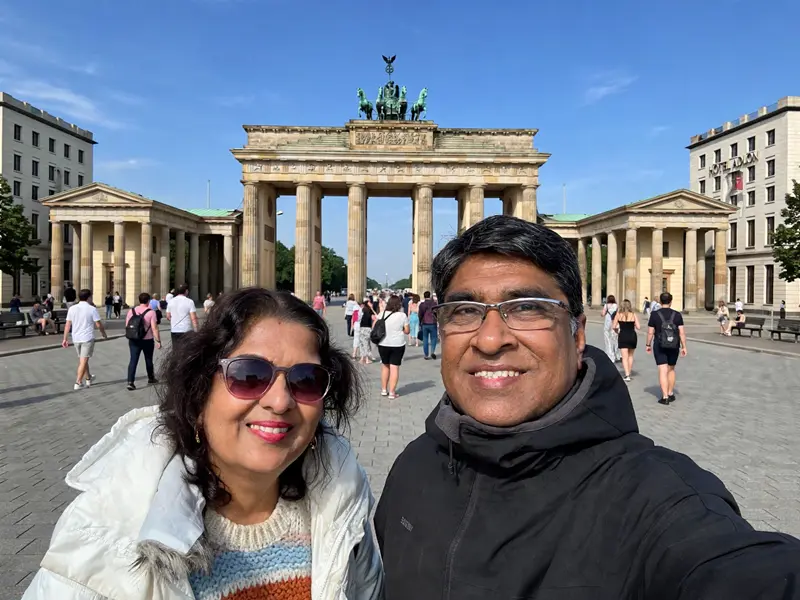
Berlin travel guide: Berlin is a city where Prussian landmarks, the scars and stories of the 20th century, UNESCO-listed museums, creative neighborhoods and a lively food and music scene sit side by side. This Berlin travel guide covers the city’s essential sights, 18 major attractions, ticket and transport information, airport connections, seasonal advice, local food, budgets and a practical three-day itinerary, with an optional day trip to Potsdam. It is designed for first-time visitors as well as travellers who want to explore Berlin beyond the main postcard views.
🎧 Listen to Our Berlin Travel Guide Podcast
Prefer listening to reading? Tune in to the GlimpseTrip Berlin Travel Guide podcast and discover the city’s 18 best attractions, fascinating history, local food, public transport, travel costs and practical sightseeing tips. Get inspired and start planning your Berlin adventure!
Berlin at a Glance
Country: Germany | Region / State: Berlin is both Germany’s capital and one of its 16 federal states.
Population: About 3.70 million in the official population estimate for year-end 2025. Berlin’s separate population-register count was about 3.92 million on 30 June 2026; the two figures use different statistical methods.
Religion: Berlin is highly secular and religiously diverse. Evangelical and Roman Catholic churches are the largest registered religious organisations; Muslim, Jewish, Orthodox Christian, Buddhist, Hindu, Sikh and other communities are also present. Many residents have no religious affiliation.
Language: German is the official language. English is widely understood in central tourist areas, hotels and many museums, but not everyone will speak it.
Currency: Euro (EUR, €) | Approx. exchange rate: €1 = US$1.0939 on 23 November 2026 (ECB reference rate; bank and card rates differ).
Time zone: Central European Time (CET, UTC+1) in winter and Central European Summer Time (CEST, UTC+2) from the last Sunday in March to the last Sunday in October.
Calling code: +49
Electricity: 230V, 50Hz | Plugs: Types C and F.
Emergency numbers: Police 110 | Fire and ambulance 112.
Best known for: Brandenburg Gate, Reichstag, Berlin Wall history, Museum Island, Prussian palaces, modern art, nightlife, multicultural food and major cultural festivals.
Is Berlin Worth Visiting?
Absolutely. Berlin is especially rewarding for travellers interested in modern European history, architecture, museums, street art, food and contemporary culture. Three full days cover the main central sights, but four or five days allow time for neighbourhoods, a slower museum visit and Potsdam. Berlin is geographically spread out, so use public transport rather than trying to walk between every district. Some of its most moving and memorable experiences—the Brandenburg Gate, Berlin Wall Memorial, East Side Gallery and Holocaust Memorial—are free.
Berlin – Top Attractions at a Glance
| Attraction | Ticket (adult) | Opening Hours | Best For |
|---|---|---|---|
| 1. Brandenburg Gate (Brandenburger Tor) | Free | Outdoor site 24/7 | Berlin’s best-known landmark and a powerful symbol of German unity. |
| 2. Reichstag Building & Glass Dome | Free; registration required | Timed visits; advance registration | The seat of the German Bundestag combines a historic parliament building with a striking modern glass dome and rooftop terrace. |
| 3. Berlin Tv Tower (Berliner Fernsehturm) | From €28.50 | Usually 10:00–23:00 | At 368 metres, the TV Tower is one of Berlin’s defining skyline features. |
| 4. Museum Island (Museumsinsel) | €24 island day ticket | Mostly Tue–Sun; check each museum | This UNESCO World Heritage Site is a remarkable ensemble of museums on the River Spree, important for archaeology, sculpture, European painting and cultural history. |
| 5. Berlin Cathedral (Berliner Dom) | €15 standard | Usually 09:00–18:00; Sun from 12:00 | The monumental Protestant cathedral is one of the most recognisable buildings on Museum Island. |
| 6. Charlottenburg Palace (Schloss Charlottenburg) | From €12 | Tue–Sun; seasonal hours | Berlin’s largest palace complex recalls the splendour of the Prussian royal court. |
| 7. East Side Gallery & Berlin Wall Memorial | Free | Outdoor sites 24/7; centre Tue–Sun | Together these places explain the physical and human history of Berlin’s division. |
| 8. Memorial To the Murdered Jews of Europe (Holocaust Memorial) | Free | Field 24/7; centre Tue–Sun | This central memorial commemorates the Jewish victims of the Holocaust. |
| 9. Gendarmenmarkt & French and German Cathedrals | Square free; interiors vary | Square 24/7; buildings vary | Often described as one of Berlin’s most beautiful squares, Gendarmenmarkt is framed by the French Cathedral, German Cathedral and Konzerthaus. |
| 10. Checkpoint Charlie & Topography of Terror | Outdoor sites free; museum paid | Outdoor 24/7; Topography 10:00–20:00 | Checkpoint Charlie is the best-known former crossing between East and West Berlin. |
| 11. Tiergarten, Victory Column & Potsdamer Platz | Park free; viewpoints paid | Park open; tower/viewpoint vary | This combination shows three sides of Berlin: a huge central park, a historic monument with city views and a modern business and entertainment district. |
| 12. Alexanderplatz & Hackescher Markt | Free to explore | Squares open; shops usually Mon–Sat | Alexanderplatz is a lively transport and shopping hub in former East Berlin, while Hackescher Markt offers courtyards, cafés, boutiques and street life nearby. |
| 13. Humboldt Forum & Berlin Palace | Public areas free; exhibits vary | Wed–Mon 10:30–18:30 | The reconstructed Berlin Palace façade houses a cultural centre with exhibitions and events exploring global cultures and Berlin’s history. |
| 14. Ddr Museum – Everyday Life In East Germany | €13.90 adult | Daily 09:00–21:00 | This interactive museum offers an accessible introduction to daily life in the former German Democratic Republic, from housing and school to surveillance, travel and the Berlin Wall. |
| 15. Jewish Museum Berlin | Permanent exhibition free | Tue–Sun 10:00–18:00 | One of Europe’s major Jewish museums, known for its striking Daniel Libeskind architecture and exhibitions on Jewish history, culture and life in Germany. |
| 16. Berlin Zoological Garden (Zoo Berlin) | From €16 online | Daily; seasonal closing times | One of Europe’s best-known city zoos, with varied animal habitats and a family-friendly location beside Zoological Garden station and the western shopping district. |
| 17. Tempelhofer Feld – the Former Airport Runways | Free | Seasonal park hours | This enormous former airport is now a distinctive public park where visitors can walk, cycle, skate, picnic and experience Berlin’s open landscape on the old runways. |
| 18. Potsdam & Sanssouci Palace – Optional Day Trip | From €14 | Palace Tue–Sun; timed entry | Potsdam is an easy excursion from Berlin, known for Sanssouci Palace, landscaped gardens and a UNESCO-listed ensemble of royal buildings. |
Prices are indicative adult rates or starting prices where a current official rate is published. Free outdoor access does not necessarily include museums, towers, guided tours or special exhibitions. Always check the official ticket page for your date.
Interactive Map – All 18 Main Attractions
Explore Berlin with our interactive tourist map, featuring major attractions, historical landmarks, museums and other interesting places across the city.
Use the map to discover the locations of popular sights, explore different neighbourhoods and plan your sightseeing route. Click on individual markers to view locations and get directions.
How to use the map: Zoom in and out, select individual markers to explore attractions, and use the map to plan your visit to Berlin.
🏛️ TOP 18 TOURIST ATTRACTIONS – DETAILED GUIDE
1. Brandenburg Gate (Brandenburger Tor)

Why visit: Berlin’s best-known landmark and a powerful symbol of German unity. The neoclassical gate was completed in 1791 and later stood beside the divided city’s border zone.
What to see & do: Walk through the five passages, look up at the Quadriga, explore Pariser Platz and follow Unter den Linden towards Museum Island. The gate is atmospheric after sunset.
Location: Pariser Platz, 10117 Berlin, Germany | Google Maps
How to reach: U5 or S-Bahn to Brandenburger Tor; buses 100 and 300 stop nearby. It is an easy walk from the Reichstag and Holocaust Memorial.
Opening hours: Outdoor monument and square accessible at all times.
Ticket price: Free
Official tickets / visitor information: Check official visitor information and tickets
Recommended visit time: 30–45 minutes; best at sunrise or after dark.
Visitor tips: Visit early for clearer photographs. Keep the square clear during events and follow temporary crowd-control barriers.
2. Reichstag Building & Glass Dome

Why visit: The seat of the German Bundestag combines a historic parliament building with a striking modern glass dome and rooftop terrace. The dome offers views across the government quarter and central Berlin.
What to see & do: Walk up the spiral ramp inside the dome, look down into the parliamentary chamber and enjoy views of Brandenburg Gate, Tiergarten and government buildings.
Location: Platz der Republik 1, 11011 Berlin, Germany | Google Maps
How to reach: U5 to Bundestag or Brandenburger Tor; S-Bahn to Brandenburger Tor; bus 100 stops close by.
Opening hours: Dome and roof terrace generally daily; last admission 21:45. Closed 24 December and from 16:00 on 31 December; check current visitor notice.
Ticket price: Free, but advance registration is compulsory.
Official tickets / visitor information: Check official visitor information and tickets
Recommended visit time: 1–1.5 hours; late afternoon and sunset slots are popular.
Visitor tips: Register every visitor using required personal details. Bring the same valid identity document used for registration. Security checks apply.
3. Berlin TV Tower (Berliner Fernsehturm)

Why visit: At 368 metres, the TV Tower is one of Berlin’s defining skyline features. Its observation deck, about 203 metres above street level, provides a broad view over the city.
What to see & do: Identify the Reichstag, Brandenburg Gate, Museum Island and Tiergarten from the observation deck. The revolving restaurant requires its own reservation.
Location: Panoramastraße 1A, 10178 Berlin, Germany | Google Maps
How to reach: Alexanderplatz is served by U2, U5, U8, S-Bahn, trams and buses. The tower is a short walk from the station.
Opening hours: Observation deck generally daily 10:00–23:00; maintenance closures and seasonal changes apply.
Ticket price: Adults from €28.50; children from €18.50. Prices depend on ticket type and date.
Official tickets / visitor information: Check official visitor information and tickets
Recommended visit time: 1–1.5 hours; sunset is popular, so book ahead.
Visitor tips: Choose a timed ticket and arrive early for security. The tower is not fully barrier-free for visitors with limited mobility; check accessibility before booking.
4. Museum Island (Museumsinsel)

Why visit: This UNESCO World Heritage Site is a remarkable ensemble of museums on the River Spree, important for archaeology, sculpture, European painting and cultural history.
What to see & do: Choose from Neues Museum, Altes Museum, Alte Nationalgalerie, Bode-Museum and Pergamonmuseum. Das Panorama. The Neues Museum is known for the bust of Nefertiti.
Location: Museum Island, 10178 Berlin, Germany | Google Maps
How to reach: U5 to Museumsinsel; S-Bahn to Hackescher Markt or Friedrichstraße; buses 100/200 and tram M1 serve the wider area.
Opening hours: Most state museums are open Tuesday–Sunday, commonly 10:00–18:00, but each museum has its own schedule and many close Monday.
Ticket price: Museumsinsel day ticket €24; individual tickets and concessions vary.
Official tickets / visitor information: Check official visitor information and tickets
Recommended visit time: 3–4 hours for two or three museums; start early.
Visitor tips: Important update: the Pergamonmuseum itself is completely closed to visitors for renovation. Pergamonmuseum. Das Panorama is a separate open venue. Check the official museum list.
5. Berlin Cathedral (Berliner Dom)

Why visit: The monumental Protestant cathedral is one of the most recognisable buildings on Museum Island. Visitors can explore its ornate interior, Hohenzollern Crypt and panoramic dome route.
What to see & do: Explore the nave, imperial staircase, chapels, Hohenzollern Crypt and panoramic viewing route about 50 metres above ground.
Location: Am Lustgarten, 10178 Berlin, Germany | Google Maps
How to reach: U5 to Museumsinsel; S-Bahn to Hackescher Markt; buses 100/200 stop in the Lustgarten area.
Opening hours: Generally Monday–Saturday 09:00–18:00 and Sunday 12:00–18:00; last admission normally 17:00. Services and events may change access.
Ticket price: Standard visitor ticket €15; concessions and family options available.
Official tickets / visitor information: Check official visitor information and tickets
Recommended visit time: About 1.5 hours; visit outside service times.
Visitor tips: Dress respectfully and keep quiet during services. The dome route includes many steps; check accessibility details.
6. Charlottenburg Palace (Schloss Charlottenburg)

Why visit: Berlin’s largest palace complex recalls the splendour of the Prussian royal court. Its baroque and rococo rooms, formal gardens and lakeside paths make it a rewarding half-day visit.
What to see & do: Visit the Old Palace apartments, Porcelain Cabinet and palace chapel; explore the New Wing if time permits, then stroll through the formal gardens.
Location: Spandauer Damm 10–22, 14059 Berlin, Germany | Google Maps
How to reach: U7 to Richard-Wagner-Platz or U2 to Sophie-Charlotte-Platz, followed by a walk; buses serve the palace area.
Opening hours: Old Palace generally Tue–Sun 10:00–16:30 in Nov–Dec and 10:00–17:30 Apr–Oct. Closed Monday; special holiday hours apply.
Ticket price: Old Palace single ticket €12 regular / €8 reduced; combined tickets differ. Garden grounds are free.
Official tickets / visitor information: Check official visitor information and tickets
Recommended visit time: 2–3 hours; spring/summer for gardens, winter for interiors.
Visitor tips: Check which palace rooms are open. Timed entry may apply. The grounds are extensive; wear comfortable shoes.
7. East Side Gallery & Berlin Wall Memorial

Why visit: Together these places explain the physical and human history of Berlin’s division. The East Side Gallery is a long open-air mural gallery; Bernauer Straße preserves a memorial landscape and documentation centre.
What to see & do: At the Gallery, look for the Fraternal Kiss mural and works by international artists. At Bernauer Straße, see preserved border installations, the former death strip and exhibitions.
Location: East Side Gallery: Mühlenstraße 70–71, 10243 Berlin; Berlin Wall Memorial: Bernauer Straße 111, 13355 Berlin, Germany | Google Maps
How to reach: East Side Gallery: S-Bahn Ostbahnhof or Warschauer Straße. Wall Memorial: U8 Bernauer Straße, S-Bahn Nordbahnhof and tram M10.
Opening hours: East Side Gallery outdoor section accessible at all times. Wall Memorial outdoor grounds generally daily; Documentation Centre normally Tue–Sun 10:00–18:00.
Ticket price: Free for outdoor gallery, memorial grounds and Documentation Centre.
Official tickets / visitor information: Check official visitor information and tickets
Recommended visit time: 1.5–2.5 hours combined; longer for exhibitions.
Visitor tips: Do not climb or write on the Wall. Give artists’ work and visitors space. At Bernauer Straße, use marked paths and viewing platforms.
8. Memorial to the Murdered Jews of Europe (Holocaust Memorial)

Why visit: This central memorial commemorates the Jewish victims of the Holocaust. Its field of concrete stelae and underground Information Centre invite quiet reflection and historical learning.
What to see & do: Walk through the changing-height stelae and visit the underground exhibition documenting persecution, deportation and the murder of Europe’s Jews.
Location: Cora-Berliner-Straße 1, 10117 Berlin, Germany | Google Maps
How to reach: A short walk from Brandenburg Gate and Potsdamer Platz; U5 or S-Bahn to Brandenburger Tor.
Opening hours: Outdoor Field of Stelae accessible 24 hours. Information Centre generally Tue–Sun 10:00–18:00, last admission 17:15; closed Monday and on specified holidays.
Ticket price: Free admission to the memorial and Information Centre.
Official tickets / visitor information: Check official visitor information and tickets
Recommended visit time: 45–90 minutes; visit Information Centre during opening hours.
Visitor tips: This is a place of remembrance. Walk calmly, do not climb on stelae, keep noise low and follow visitor regulations.
9. Gendarmenmarkt & French and German Cathedrals

Why visit: Often described as one of Berlin’s most beautiful squares, Gendarmenmarkt is framed by the French Cathedral, German Cathedral and Konzerthaus.
What to see & do: Admire the twin domed buildings, Konzerthaus façade and square’s symmetry. Christmas market dates and admission arrangements change annually.
Location: Gendarmenmarkt, 10117 Berlin, Germany | Google Maps
How to reach: U2 to Hausvogteiplatz or Stadtmitte; U5 to Museumsinsel; walk from Unter den Linden.
Opening hours: The square is a public space. Cathedral interiors, exhibitions and viewing areas have separate hours.
Ticket price: Square access free; cathedral exhibitions or viewing platforms may charge admission.
Official tickets / visitor information: Check official visitor information and tickets
Recommended visit time: 45–75 minutes; evening concerts and Christmas markets add atmosphere.
Visitor tips: Check current access to the French Cathedral viewing platform and German Cathedral exhibition. Events may require ticketed entry.
10. Checkpoint Charlie & Topography of Terror

Why visit: Checkpoint Charlie is the best-known former crossing between East and West Berlin. Nearby, the Topography of Terror documents institutions and crimes of Nazi persecution and terror.
What to see & do: Compare the checkpoint site with the extensive Topography exhibition, which explains the SS, Gestapo and Nazi institutions through documents and photographs.
Location: Checkpoint Charlie: Friedrichstraße 43–45, 10117 Berlin; Topography of Terror: Niederkirchnerstraße 8, 10963 Berlin, Germany | Google Maps
How to reach: U6 to Kochstraße/Checkpoint Charlie; U2 or S-Bahn to Potsdamer Platz for Topography of Terror.
Opening hours: Checkpoint outdoor location accessible at all times. Topography exhibitions daily 10:00–20:00, with holiday closures 24/31 December and 1 January.
Ticket price: Checkpoint outdoor site free; Topography of Terror free. Private Mauermuseum charges separately.
Official tickets / visitor information: Check official visitor information and tickets
Recommended visit time: 1.5–2 hours combined; allow more for exhibitions.
Visitor tips: The present-day checkpoint booth is a reconstruction. For deeper history, prioritise the Topography of Terror documentation centre.
11. Tiergarten, Victory Column & Potsdamer Platz

Why visit: This combination shows three sides of Berlin: a huge central park, a historic monument with city views and a modern business and entertainment district.
What to see & do: Walk tree-lined paths, view the golden Victory Column and explore Potsdamer Platz’s architecture, shops, restaurants and observation options.
Location: Tiergarten and Victory Column: Großer Stern, 10557 Berlin; Potsdamer Platz, 10785 Berlin, Germany | Google Maps
How to reach: Bus 100 to Victory Column; S-Bahn/U2 to Potsdamer Platz. The park can be explored on foot or by bicycle.
Opening hours: Tiergarten is a public park, generally accessible at all times. Victory Column and Potsdamer Platz observation venues have separate hours.
Ticket price: Tiergarten free; Victory Column and private viewpoints charge admission; confirm current rates.
Official tickets / visitor information: Check official visitor information and tickets
Recommended visit time: 1.5–2.5 hours; spring–autumn for park walks, sunset for skyline views.
Visitor tips: The park is large; choose a defined walking or cycling route. Check whether the Victory Column viewing platform is open.
12. Alexanderplatz & Hackescher Markt

Why visit: Alexanderplatz is a lively transport and shopping hub in former East Berlin, while Hackescher Markt offers courtyards, cafés, boutiques and street life nearby.
What to see & do: See the World Time Clock, Red Town Hall area and TV Tower; walk towards Hackesche Höfe for connected courtyards, galleries, cafés and shops.
Location: Alexanderplatz and Hackescher Markt, 10178 Berlin, Germany | Google Maps
How to reach: Alexanderplatz is served by U2/U5/U8, S-Bahn, tram and buses. Hackescher Markt has S-Bahn and tram connections.
Opening hours: Public squares accessible at all times. Shops commonly open Monday–Saturday; many shops close Sundays.
Ticket price: Free to explore; nearby museums and attractions charge separately.
Official tickets / visitor information: Check official visitor information and tickets
Recommended visit time: 1.5–2 hours; late afternoon into evening.
Visitor tips: Use the World Clock as a meeting point. Watch belongings in busy station areas and check Sunday opening rules before shopping.
13. Humboldt Forum & Berlin Palace

Why visit: The reconstructed Berlin Palace façade houses a cultural centre with exhibitions and events exploring global cultures and Berlin’s history. Its central location makes it easy to combine with the Cathedral and Museum Island.
What to see & do: Explore BERLIN GLOBAL, ethnological and Asian art exhibitions, palace history displays, public passages and the roof terrace when open.
Location: Schloßplatz, 10178 Berlin, Germany | Google Maps
How to reach: U5 to Museumsinsel or Rotes Rathaus; buses 100, 147 and 300 serve nearby stops.
Opening hours: Exhibitions generally Wed–Mon 10:30–18:30; Tuesday closed. Special holiday hours apply.
Ticket price: Public areas free; exhibition prices vary. Roof terrace listed at €3 regular / €1.50 reduced.
Official tickets / visitor information: Check official visitor information and tickets
Recommended visit time: 1.5–3 hours depending on exhibitions.
Visitor tips: Check exhibition programme and which areas require tickets. Public passages and courtyards are distinct from ticketed exhibitions.
14. DDR Museum – Everyday Life in East Germany

Why visit: This interactive museum offers an accessible introduction to daily life in the former German Democratic Republic, from housing and school to surveillance, travel and the Berlin Wall.
What to see & do: Explore a recreated GDR apartment, everyday objects, Trabant driving simulation and displays on state surveillance, work, family life and the Wall.
Location: Karl-Liebknecht-Straße 1, 10178 Berlin, Germany | Google Maps
How to reach: Opposite Berlin Cathedral; walk from Alexanderplatz or Hackescher Markt, or take U5 to Museumsinsel.
Opening hours: Daily 09:00–21:00, including most public holidays. On 24 and 31 December it closes at 16:00.
Ticket price: Adult €13.90; concessions €8.50; children under six free.
Official tickets / visitor information: Check official visitor information and tickets
Recommended visit time: 1–1.5 hours; useful in wet or cold weather.
Visitor tips: Online tickets can reduce waiting. Some interactive exhibits are hands-on; follow instructions.
15. Jewish Museum Berlin

Why visit: One of Europe’s major Jewish museums, known for its striking Daniel Libeskind architecture and exhibitions on Jewish history, culture and life in Germany.
What to see & do: Explore the permanent exhibition, unusual spatial design, Garden of Exile and changing exhibitions.
Location: Lindenstraße 9, 10969 Berlin, Germany | Google Maps
How to reach: U1/U6 to Hallesches Tor; U6 to Kochstraße; bus 248 stops close by.
Opening hours: Tue–Sun 10:00–18:00; last admission 17:00. Closed Monday and on selected holidays.
Ticket price: Permanent exhibition free; special exhibitions may require a ticket (current visitor page lists €10 regular / €4 reduced).
Official tickets / visitor information: Check official visitor information and tickets
Recommended visit time: 2–3 hours; allow time for architecture and exhibitions.
Visitor tips: Check temporary exhibition closures and holiday schedules. Allow time to read and reflect.
16. Berlin Zoological Garden (Zoo Berlin)

Why visit: One of Europe’s best-known city zoos, with varied animal habitats and a family-friendly location beside Zoological Garden station and the western shopping district.
What to see & do: Explore themed animal areas, habitats and conservation displays. Add Aquarium Berlin only if you have enough time.
Location: Hardenbergplatz 8, 10787 Berlin, Germany | Google Maps
How to reach: S-Bahn/U-Bahn Zoologischer Garten; buses and regional trains also stop nearby.
Opening hours: Open daily. Seasonal hours range from 09:00–16:30 in winter to 09:00–18:30 in summer; last admission normally one hour before closing.
Ticket price: Adult day tickets online from €16; on-site prices can be higher. Zoo + Aquarium tickets cost more.
Official tickets / visitor information: Check official visitor information and tickets
Recommended visit time: 3–4 hours; arrive earlier in the day.
Visitor tips: Buy online if the price and date suit your plans. Animal houses and restaurants close before the zoo gates.
17. Tempelhofer Feld – The Former Airport Runways

Why visit: This enormous former airport is now a distinctive public park where visitors can walk, cycle, skate, picnic and experience Berlin’s open landscape on the old runways.
What to see & do: Walk or cycle former runways, see preserved airport landscape, community gardens and sunset over the open field.
Location: Main entrances at Tempelhofer Damm, Columbiadamm and Oderstraße, Berlin, Germany | Google Maps
How to reach: S-Bahn/U-Bahn Tempelhof; U6 Paradestraße; U8 Leinestraße or Boddinstraße; buses serve the perimeter.
Opening hours: Seasonal opening hours change monthly, from about 07:30–17:00 in midwinter to early morning–late evening in summer. Entrances close at stated times.
Ticket price: Free admission.
Official tickets / visitor information: Check official visitor information and tickets
Recommended visit time: 1.5–3 hours; spring/summer for outdoor activities and sunset views.
Visitor tips: Use marked paths and respect park rules. Cycling/skating allowed on paved areas; barbecue only in designated places. Little shade on runways.
18. Potsdam & Sanssouci Palace – Optional Day Trip

Why visit: Potsdam is an easy excursion from Berlin, known for Sanssouci Palace, landscaped gardens and a UNESCO-listed ensemble of royal buildings.
What to see & do: Visit Frederick the Great’s Sanssouci Palace, walk the vineyard terraces and landscaped park, and add the New Palace if time allows.
Location: Sanssouci Palace, Maulbeerallee, 14469 Potsdam, Germany | Google Maps
How to reach: Regional trains from Berlin to Potsdam Hauptbahnhof take roughly 25–40 minutes depending on service. Continue by bus, tram or on foot; an ABC ticket covers Potsdam.
Opening hours: Sanssouci Palace generally Tue–Sun; seasonal hours and timed-entry slots apply. Park grounds open to visitors, but palace interiors are ticketed.
Ticket price: Sanssouci Palace single ticket €14 regular / €10 reduced. 2027 sanssouci+ day ticket listed at €24 / €20 reduced.
Official tickets / visitor information: Check official visitor information and tickets
Recommended visit time: Full day; spring–autumn for gardens; check winter palace schedules.
Visitor tips: Book a timed slot for the palace and plan walking distances. Check which buildings are open and included in the ticket.
How to Reach Berlin
By air: Berlin Brandenburg Airport (BER) is the city’s international airport, southeast of central Berlin. The airport railway station is directly below Terminal 1. The Airport Express (FEX) connects BER with Berlin Hauptbahnhof in about 23 minutes and Potsdamer Platz in about 19 minutes; regional trains and S-Bahn services are also available. Check live departures before travelling.
Airport information: Berlin Brandenburg Airport – official website | Airport public transport and FEX information
By train: Berlin Hauptbahnhof is the main long-distance station, with ICE and international services. Other important stations include Ostbahnhof, Südkreuz and Gesundbrunnen. Compare routes and book through Deutsche Bahn.
By bus / coach: Long-distance coaches use Berlin’s central coach station (ZOB) near the Messe/Nord area. Check operator terminals and arrival times before booking.
By road: Berlin is connected to the German motorway network. Parking in the centre can be expensive and limited; public transport is usually easier for sightseeing.
Airport transfers: FEX and regional trains are generally the fastest public-transport options to central stations. S9 runs through several central stations but takes longer. Taxis and ride-hailing are available from signed airport ranks and pickup zones.
Public Transportation in Berlin
U-Bahn / Subway: Berlin’s U-Bahn is the city metro. It is useful for central districts and neighbourhoods. Click to see the Subway / Metro Route Map.
S-Bahn / Trains: The S-Bahn is the urban and suburban rail network; regional trains connect Berlin with Potsdam, BER Airport and surrounding towns. Click to see the Train / S-Bahn Route Maps.
Bus: Buses cover areas beyond the rail network. Bus 100 is a useful public route between major central sights, but it is a regular bus rather than a dedicated sightseeing tour.
Tram: Trams are especially useful in eastern districts and around Alexanderplatz, Hackescher Markt and Friedrichshain.
Taxi / ride-hailing: Use official taxi ranks, licensed vehicles or recognised booking apps. Confirm the destination and fare method before departure.
Tickets and fare zones: Berlin is divided into AB, BC and ABC fare zones. AB covers most city sightseeing; ABC is needed for BER Airport and Potsdam. As of 2026, a regular AB single ticket is €4 and a 24-hour AB ticket is €11.20; ABC single and 24-hour tickets are €5 and €12.90. Prices may change.
Ticket validation: Validate paper tickets before starting the journey where required. Digital tickets follow the app’s validity rules. Carry a valid ticket for the entire journey; inspections are common.
Tourist passes: The Berlin WelcomeCard combines transport with discounts at participating attractions. A 72-hour card is listed from €39.50 for AB or €45.50 for ABC; compare inclusions with your plans. Official WelcomeCard options.
Official transport: BVG fares and tickets | BVG route maps
Weather & Best Time to Visit Berlin
May to September is generally the most comfortable period for outdoor sightseeing, parks, river cruises and neighbourhood walks. April can bring cherry blossoms but the weather is changeable. June–August are the warmest and busiest months, with long daylight hours and outdoor events. September and October bring cooler days, autumn colour and the Festival of Lights season. November–March are colder and darker, but museums, concerts and Christmas markets make winter visits worthwhile. Pack layers and a rain jacket in every season.
Berlin Weather Throughout the Year – Monthly Climate Guide
| Month | Typical daily high / low | Conditions | Travel advice |
|---|---|---|---|
| January | 4 / -1°C | Cold, short days; occasional frost | Museums, indoor sights and warm layers. |
| February | 5 / -1°C | Cold and often grey | Museums; Berlinale season. |
| March | 9 / 1°C | Cool; early spring begins | Layered clothing and flexible plans. |
| April | 15 / 5°C | Changeable; spring flowers and blossoms | Light jacket and rain protection. |
| May | 20 / 9°C | Mild to warm; outdoor season | Excellent for walking and parks. |
| June | 23 / 13°C | Warm, long days | Outdoor events, cycling and river trips. |
| July | 25 / 15°C | Warmest period; occasional showers | Book accommodation early; stay hydrated. |
| August | 25 / 15°C | Warm; summer events | Parks, lakes and outdoor dining. |
| September | 20 / 11°C | Mild; cooler evenings | Good balance of weather and crowds. |
| October | 14 / 7°C | Cooler; autumn colour | Layers; Festival of Lights dates vary. |
| November | 8 / 3°C | Chilly, shorter days | Museums and first Christmas markets. |
| December | 4 / 0°C | Cold; festive markets | Warm coat, gloves and waterproof shoes. |
Approximate long-term climate normals for Berlin, rounded for travel planning; not a forecast. Actual weather varies from year to year.
Major Festivals & Events in Berlin
| Festival / Event | Date / Season | What to Expect | Visitor Information |
|---|---|---|---|
| Berlinale – Berlin International Film Festival | 10–21 February 2027 | Major international film festival with screenings, premieres and industry events. | 2027 event overview |
| Carnival of Cultures | 14–17 May 2027 | Multicultural street festival with music, dance, food stalls and a major parade; free public festival. | Official event information |
| Fête de la Musique | 21 June 2027 | Free live music across streets, parks and public venues. | Official event information |
| Christopher Street Day (CSD) | 24 July 2027 | Large Pride demonstration and celebration; route and programme can change. | Berlin event calendar |
| Festival of Lights | Usually October; 2027 dates not yet confirmed | Illuminated projections and light installations at major landmarks; check annual programme. | Visit Berlin event information |
| Berlin Christmas Markets | Usually late November–December; 2027 dates to be announced | Seasonal markets at Gendarmenmarkt, Charlottenburg Palace, Rotes Rathaus and other squares. Dates and admission vary. | Official Berlin Christmas market guide |
Food & Cuisine – Must-Try Foods in Berlin
Berlin’s food scene reflects both German traditions and its international communities. You can eat well on a budget at bakeries, market stalls and casual Imbiss counters, or explore modern German, Turkish, Vietnamese and plant-based restaurants.
Currywurst: Sliced sausage with spiced tomato-curry sauce, often served with fries. Try a long-established Imbiss such as Curry 36 or Konnopke’s.
Berliner Döner Kebab: Berlin has a famous döner culture, with many styles and vegetarian options.
Berliner Pfannkuchen: A jam-filled doughnut, often called a Berliner outside the city.
Boulette: A seasoned German-style meat patty, often served with mustard or potato salad.
Eisbein: A traditional slow-cooked or cured pork knuckle dish, usually served with peas and sauerkraut.
Also try: Schnitzel, potato dishes, seasonal asparagus in spring, bakery breads, craft beer and Berliner Weisse.
Vegetarian / vegan: Berlin has many vegetarian and vegan restaurants. Ask whether sauces, stocks or toppings contain meat, dairy or eggs.
Food safety: Choose busy stalls with good food turnover, keep food chilled in hot weather and tell staff clearly about allergies.
Budget & Costs in Berlin
Berlin can be more affordable than some major Western European capitals, particularly if you combine free outdoor landmarks with a few paid museums or viewpoints. These broad planning ranges are for 2026–2027, per person per day, excluding flights. Accommodation ranges assume a shared room for the mid-range and higher-end columns; prices rise during trade fairs, festivals and major events.
| Expense | Budget | Mid-range | Higher-end |
|---|---|---|---|
| Hostel dorm bed (per person/night) | €35–65 | — | — |
| Private / 3-star room (per room/night) | €80–130 | €130–220 | €220+ |
| Meals (per person/day) | €20–30 | €35–55 | €60+ |
| Local transport (24-hour ticket) | €11.20 AB / €12.90 ABC | Same | Same |
| Attractions (per person/day) | €0–15 | €15–35 | €35+ |
| Estimated daily total per person | €85–130 | €150–230 | €250+ |
Taxes: Displayed consumer prices generally include VAT. Berlin’s accommodation City Tax may be added to hotel bills; check the booking total and current city rules.
Cash and cards: Cards are widely accepted, but some small cafés, kiosks, markets and independent businesses may still prefer cash. Carry a modest amount of euros.
Currency exchange: Use bank ATMs or reputable exchange services. Decline dynamic currency conversion unless you have compared the rate.
Bargaining: Not normal in shops or restaurants; sometimes possible at flea markets.
Tipping: Rounding up or adding around 5–10% for good restaurant service is common.
Safety & Security in Berlin
Berlin is a large international capital and most visitors complete their trips without serious problems. Use normal big-city precautions, particularly in crowded transport hubs, busy nightlife areas and tourist hotspots.
Emergency contacts: Police 110; fire and ambulance 112. For non-emergency medical advice in Germany, 116117 may be used for the medical on-call service.
Pickpockets: Keep phones and wallets secure on crowded U-Bahn/S-Bahn trains, at Alexanderplatz, around major sights and at busy markets. Do not leave bags unattended.
Nightlife: Plan your return journey, watch your drink, use licensed taxis or public transport and avoid unlicensed ticket sellers or street touts.
Transport safety: Validate the correct ticket and zone. Use marked crossings and cycle lanes carefully; bicycles and e-scooters move quickly.
Health: Carry travel insurance, required medicines in original packaging and a note of relevant allergies. Pharmacies are marked “Apotheke”.
Women and solo travellers: Use ordinary city awareness, choose well-lit routes at night and trust your judgement if a situation feels uncomfortable.
Natural hazards: Heatwaves can affect summer sightseeing; winter pavements can be slippery. Follow official weather and public-safety advice.
Visa Requirements for Germany
Germany is part of the Schengen Area. Short-stay visa requirements depend on nationality, passport type, purpose and length of stay. Many visa-exempt visitors may stay up to 90 days in any 180-day period across the Schengen Area; other travellers need a Schengen short-stay Type C visa.
Indian passport holders: Indian citizens generally need a Schengen visa for tourism visits to Germany. Apply through the official German mission process in India and the designated visa application service. Appointment availability and processing times can vary, so plan well ahead.
Official information for India: German Missions in India – Schengen visa information | General visa information
Entry documents: Check passport validity, travel medical insurance, accommodation and transport details, proof of funds and supporting documents required for your case.
Important: A visa for Germany may permit travel across other Schengen countries, but the main-destination rule applies when choosing where to lodge the application. Confirm current rules with the official authority.
Time Zone in Berlin
Berlin uses Central European Time (CET, UTC+1) in winter and Central European Summer Time (CEST, UTC+2) in summer. Clocks normally move forward on the last Sunday in March and back on the last Sunday in October. Germany has one time zone.
Useful German Words and Greetings – Meet & Greet
| German phrase | Meaning in English | Pronunciation |
|---|---|---|
| Guten Tag | Hello / Good day | GOO-ten tahk |
| Danke | Thank you | DAHN-kuh |
| Bitte | Please / You’re welcome | BIT-tuh |
| Entschuldigung | Excuse me / Sorry | ent-SHOOL-dee-goong |
| Wie viel kostet das? | How much does that cost? | vee feel KOS-tet dahs |
| Auf Wiedersehen | Goodbye | owf VEE-der-zay-en |
SIM Cards, Mobile Networks, Internet, Electricity & Power Plugs
Major mobile networks: Deutsche Telekom, Vodafone and Telefónica (O2) operate in Germany. Prepaid offers, eSIM availability and data packages change frequently.
Official operators: Telekom prepaid | Vodafone CallYa | O2 prepaid
Tourist SIM / eSIM: Compare a local prepaid SIM with an international travel eSIM before arrival. German prepaid SIM registration requires identity verification; keep your passport available. Confirm your phone is unlocked and eSIM-compatible.
Coverage: Coverage is generally strong across Berlin. Underground stations, large buildings and crowded events can affect signal quality.
Electricity: 230V, 50Hz. Germany uses Type C and Type F sockets. Travellers with other plug types need an adapter; check device voltage compatibility.
Drinking Water, Public Toilets & Public Facilities
Drinking water: German tap water is generally safe to drink and is subject to strict quality standards. Refill a reusable bottle where practical.
Public toilets: Berlin has public toilets across the city. Some are free and some charge around €0.50; fees and accessibility vary by location. Use the official city toilet map or “Berliner Toilette” app.
Official information: Berlin public toilet information | Accessible Berlin visitor services
Public facilities: Major railway stations have luggage lockers, toilets, shops and food outlets. Tourist information points, museum cloakrooms and public Wi-Fi are available at selected venues.
People & Culture
Berlin is international, multilingual and culturally varied. German is the everyday public language, but English is common in central tourist areas. The city values personal space, punctuality in formal appointments and direct communication.
Respect memorials and religious sites. Ask before photographing people at close range, and check photography rules inside museums and exhibitions. At the Holocaust Memorial and other remembrance sites, behave quietly and do not climb on memorial structures.
Many shops close on Sundays, although restaurants, museums, transport hubs and selected convenience stores remain open. Service charges are usually included in listed prices; tipping is a gesture of appreciation rather than an obligation.
Historical Information
Berlin grew from medieval settlements along the River Spree and became a major centre of the Kingdom of Prussia. In the 19th century it developed into the capital of the German Empire and a major industrial and cultural city.
The Nazi dictatorship made Berlin the centre of a regime responsible for war, persecution and the Holocaust. The Second World War left large parts of the city damaged. After 1945, Berlin was divided into occupation sectors; the city later became a focal point of the Cold War.
The Berlin Wall was built in 1961 and separated East and West Berlin until its opening in November 1989. German reunification followed in 1990. Today Berlin is Germany’s capital and a city where historic sites, memorials, museums and contemporary neighbourhoods preserve and interpret these layers of history.
Shopping – Things to Buy in Berlin
What to buy: Ampelmann souvenirs inspired by the East German pedestrian signal, Berlin Bear merchandise, local design products, books, art prints, handmade ceramics, food gifts and Berlin-themed items from museum shops.
Where to shop: Kurfürstendamm and KaDeWe for major retail; Hackescher Markt for boutiques and design; Mall of Berlin near Potsdamer Platz; Mauerpark flea market on Sundays; Turkish Market at Maybachufer, usually Tuesdays and Fridays (check current schedule).
Tax-free shopping: Visitors whose residence is outside the EU may qualify for a VAT refund on eligible private purchases exported from the EU within the required period. Ask the retailer for tax-free paperwork, keep receipts and present goods and documents to customs when leaving the EU. Refund providers deduct fees.
Official guidance: Visit Berlin – VAT / tax-free shopping
Bargaining: Not customary in regular shops. Polite bargaining may be accepted at some flea-market stalls.
Best Photographic Places in Berlin
Brandenburg Gate: Photograph the gate from Pariser Platz early in the morning or after dark.
Reichstag: The glass dome and rooftop terrace offer city views; advance registration is required.
Museum Island and Berlin Cathedral: Capture the buildings from bridges and riverbanks along the Spree.
East Side Gallery: Photograph the murals respectfully and avoid blocking the path.
Oberbaum Bridge: A classic view of the Spree, bridge towers and TV Tower in the distance.
Victory Column and Tiergarten: Green parkland and a distinctive monument, especially in spring and autumn.
Tempelhofer Feld: Wide runway views and open skies make it a strong sunset location.
Charlottenburg Palace: The palace façade and formal gardens are especially photogenic in spring and summer.
Photography etiquette: Follow museum and memorial rules; do not use flash where prohibited or photograph security-restricted areas.
Nightlife in Berlin
Berlin’s nightlife ranges from live music and theatre to bars, beer gardens and internationally known electronic-music clubs. Popular areas include Kreuzberg, Friedrichshain, Neukölln and parts of Mitte. Venue policies, queues, dress expectations and entry decisions vary.
Evening experiences: Try a Spree-side walk, concert, small live-music venue, late café or club night. Book major performances in advance.
Adult entertainment and local laws: Sex work is regulated under German federal law and local rules. Use lawful, reputable venues, respect consent and age requirements, and avoid coercion, trafficking or unlicensed operators.
Visitor precautions: Watch your drink, agree on a safe way home, keep valuables secure and avoid unlicensed street offers or unexplained cover charges.
Getting back safely: U-Bahn and S-Bahn night services vary by weekday; many lines operate through the night on weekends, while night buses cover other periods. Check live BVG departures.
Do’s and Don’ts in Berlin
| Do’s | Don’ts |
|---|---|
| Validate your ticket before travel when required. | Do not board without a valid ticket. |
| Book the Reichstag dome in advance. | Do not assume you can walk in without registration. |
| Respect memorials and historical sites. | Do not climb on memorials or treat them as playgrounds. |
| Carry a bank card and some cash. | Do not assume every small shop accepts cards. |
| Check Sunday opening hours. | Do not plan a full shopping day on Sunday. |
| Use marked cycle lanes and crossings. | Do not walk or stand in bicycle lanes. |
| Check museum closure days and timed entries. | Do not assume every museum is open every day. |
| Keep belongings secure in crowded stations. | Do not leave bags or phones unattended. |
3-Day Berlin Itinerary – GlimpseTrip Recommendation (Optional Day 4)
This itinerary assumes three full sightseeing days based in central Berlin. It groups sights geographically to reduce backtracking. Book the Reichstag dome and timed museum entries before travelling. Day 4 is an optional Potsdam excursion.
Day 1 – Historic Mitte, Government Quarter & Museum Island
Start at Brandenburg Gate, then walk to the Reichstag for your pre-booked dome visit. Continue to the Holocaust Memorial, Gendarmenmarkt and Unter den Linden. Spend the afternoon on Museum Island; choose one or two museums rather than trying to see them all. Finish at Berlin Cathedral and Humboldt Forum. Check individual museum closing days before setting the order.
🗺️ Day 1 Google Maps Route: Open Day 1 walking route in Google Maps
Day 2 – Berlin Wall, East Berlin & Cold War History
Begin at the Berlin Wall Memorial on Bernauer Straße, then travel to the East Side Gallery. Continue to Alexanderplatz and the DDR Museum. In the afternoon, visit Checkpoint Charlie, Topography of Terror and the Jewish Museum if time allows. This is a transit-heavy day, so use the two route segments below.
🗺️ Day 2 – Route segment 1: Wall Memorial → East Side Gallery → Alexanderplatz → DDR Museum
🗺️ Day 2 – Route segment 2: DDR Museum → Checkpoint Charlie → Topography of Terror → Jewish Museum
Day 3 – Charlottenburg, Tiergarten & Western Berlin
Spend the morning at Charlottenburg Palace and its gardens. Travel towards Tiergarten and the Victory Column, then visit Berlin Zoo if it interests you. End around Potsdamer Platz for architecture, shops, dinner or a viewpoint visit. If you prefer a relaxed day, skip the Zoo and spend longer in the park.
🗺️ Day 3 Google Maps Route: Open Day 3 route in Google Maps
Day 4 – Optional Potsdam & Sanssouci Palace
Take a regional train from Berlin to Potsdam. Visit Sanssouci Palace with a timed ticket, then explore the park and add the New Palace or another open palace if time and ticket access allow. Check the 2027 opening schedule and ticket combination before departure.
🗺️ Day 4 Google Maps Route: Open Day 4 public-transport route to Sanssouci Palace
Google Maps may adjust public-transport connections and walking paths according to service changes. Check the route and live timetable on the day. Day 2 is deliberately split into two route links.
Frequently Asked Questions About Berlin
Is Berlin safe for tourists?
Berlin is generally manageable for visitors who use normal big-city precautions. Keep valuables secure in crowded stations and nightlife areas, use licensed transport and call 110 for police or 112 for fire and ambulance emergencies.
How many days are enough for Berlin?
Three full days cover the main central attractions at a fairly active pace. Four or five days allow more time for neighbourhoods, museums and an optional day trip to Potsdam.
What is the best time to visit Berlin?
May to September is generally best for outdoor sightseeing and long days. April brings spring flowers and possible cherry blossoms; October has autumn colour and light events; winter is good for museums and Christmas markets.
What are the must-see attractions in Berlin?
Start with Brandenburg Gate, the Reichstag dome, Museum Island, Berlin Cathedral, East Side Gallery, Berlin Wall Memorial, Holocaust Memorial, Charlottenburg Palace and the TV Tower.
Do I need to book Berlin attraction tickets in advance?
Yes for the Reichstag dome, and it is sensible for the TV Tower, popular museum exhibitions and Sanssouci Palace timed entry. Many outdoor landmarks and memorials are free and do not need tickets.
How do I get from BER Airport to central Berlin?
The FEX Airport Express reaches Berlin Hauptbahnhof in about 23 minutes and Potsdamer Platz in about 19 minutes. Regional trains and S-Bahn services also run from the airport station at Terminal 1.
Can I use a travel card on Berlin public transport?
Yes. The Berlin WelcomeCard includes transport for the selected AB or ABC zone and discounts at participating attractions. A regular BVG 24-hour ticket may be cheaper if you do not need attraction discounts.
What local food should I try?
Try Currywurst, Berliner Döner Kebab, Berliner Pfannkuchen, Boulette and seasonal German dishes. Berlin also has a large vegetarian and vegan food scene.
Explore More GlimpseTrip Travel Guides
Browse the GlimpseTrip homepage and explore Worldwide Travel Guide from the Destinations menu.
Official Sources & Visitor Information
Visit Berlin – official tourism portal
Berlin.de – official city portal
Deutsche Bahn – train information and booking
Staatliche Museen zu Berlin – museums and tickets
German Bundestag – Reichstag dome registration
German Missions in India – Schengen visa information
Berlin monthly weather and travel advice
German Environment Agency – tap water quality
Visitor facts, ticket prices, transport fares and seasonal dates were checked on 23 November 2026 against the official sources linked in the relevant sections. Always reconfirm before travel because operators can change opening times, ticket prices and access conditions.
🌍 Loved this Travel Guide? Join GlimpseTrip Family!
We are creating worldwide travel guides – 70+ cities live! Get new guides, hidden gems, maps & itineraries in your inbox – No spam, only travel love.
💬 Have a question? Want custom itinerary? Your feedback means world to us!
Write to us: contact@glimpsetrip.com – We reply within 24 hours!
Or use our Contact Page – Share appreciation, questions, suggestions & valuable feedback.
🙏 Your small feedback helps us make better guides for all travellers – Thank you for being part of GlimpseTrip journey!
Safe travels from GlimpseTrip – See the world, with a glimpse of wonder!
Leave a Reply