
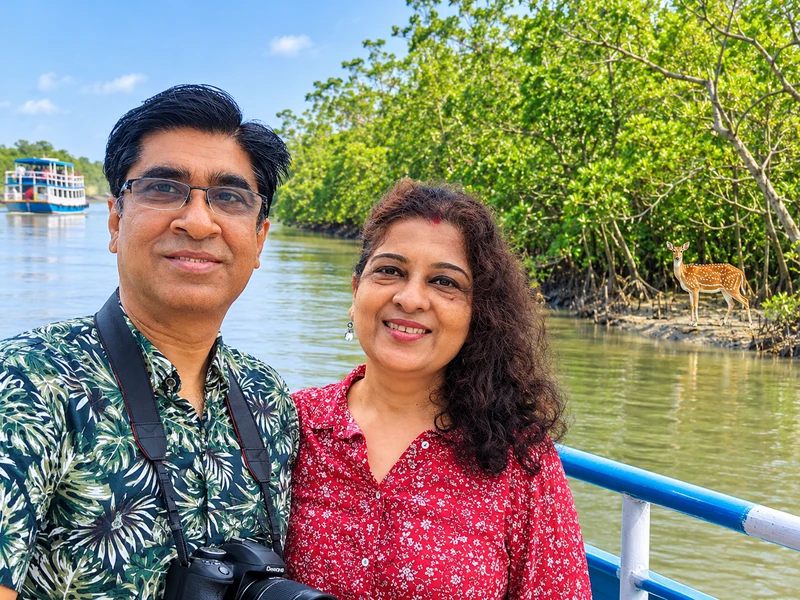
A 3D2N Sundarban Tour from Kolkata is a chance to leave the city behind and explore one of the world’s most remarkable mangrove landscapes. Instead of roads and crowded attractions, the journey takes you through tidal rivers, narrow creeks, mangrove forests and watchtowers where visitors look for birds and wildlife.
This GlimpseTrip guide explains what the Sundarban is, what you may see, how to travel from Kolkata, which places are worth stopping at, and how to plan a practical 3D2N trip. It also includes a sample itinerary, hygiene advice, safety tips and questions to ask before booking.
1. Introduction to the Sundarban

The Sundarban is a vast tidal mangrove region in the Ganges–Brahmaputra delta, shared by India and Bangladesh. Its interconnected rivers, creeks, mudflats and mangrove forests create a distinctive ecosystem shaped by tides and seasonal changes. The Indian Sundarban includes the Sundarban Tiger Reserve and Sundarbans National Park, a UNESCO World Heritage Site.
The landscape is as much a part of the experience as the wildlife. During a boat journey, you may see mangrove roots rising from the mud, wide river channels, fishing boats and quiet villages along the banks. The forest is not a conventional safari park with open roads. Visitors generally explore designated tourism areas by authorised boat and observe wildlife from approved locations such as watchtowers.
Important: A tiger sighting is never guaranteed. Plan your visit for the mangrove scenery, waterways, birdlife and the experience of being in this unique ecosystem—not only for a chance to see a tiger.
🎧 Listen to Our Podcast: Discover the Sundarban
Planning a trip to the Sundarban? Join GlimpseTrip on an exciting audio journey through the magnificent mangrove forests of West Bengal. Discover the Royal Bengal tiger, fascinating wildlife, beautiful birds, boat safaris and famous watchtowers.
Our podcast explores how to plan a memorable 3-day, 2-night Sundarban adventure from Kolkata, with practical travel advice, photography opportunities, safety tips and essential information for first-time visitors.
Listen, explor
2. What Can You See in the Sundarban?
Mangrove forests and tidal waterways
The most consistent highlight is the landscape itself: dense mangroves, branching creeks, muddy banks and broad tidal rivers. The scenery changes with the tide, light and weather, so the boat journey is an important part of the experience rather than simply transport between attractions.
Birdlife

The Sundarban is rewarding for birdwatchers. Depending on the season and location, visitors may see egrets, herons, kingfishers, cormorants, sandpipers, lapwings, plovers and birds of prey.
Wildlife you may encounter

Sundarban wildlife photos- Royal Bengal tiger: the region’s best-known animal, but sightings are uncommon and never assured.
- Spotted deer: may be seen near suitable forest edges or designated viewing areas.
- Wild boar: present in the ecosystem, though sightings depend on conditions and luck.
- Estuarine crocodile: may be seen in waterways or at designated facilities.
- Water monitor lizard: a large reptile found in the region.
- River dolphins: may be encountered in some waterways, but are not guaranteed.
- Kingfishers, eagles and other birds: often among the most rewarding wildlife to watch from the boat.
- Turtles and other reptiles: several species inhabit the wider Sundarban ecosystem.
Wildlife sightings depend on season, tides, weather, route and chance. Do not ask a boat crew to approach an animal closely or leave an authorised route to improve a sighting.
3. Wildlife Photography
The Sundarban is a fascinating destination for wildlife photographers, birdwatchers, nature enthusiasts and travel photographers. Its dense mangrove forests, winding rivers, tidal creeks and rich biodiversity offer excellent opportunities to capture nature in its most authentic form.
What Can You Photograph?

Apart from the famous Royal Bengal Tiger, photographers may capture:
- Spotted deer: Beautiful photographs of deer partly hidden among mangrove vegetation.
- Estuarine crocodiles: Powerful reptiles resting along muddy riverbanks.
- Birds: Kingfishers, egrets, herons, Brahminy kites, cormorants and many other wetland birds.
- Other wildlife: Monitor lizards, wild boars and, occasionally, river dolphins.
- Mangrove landscapes: Twisted roots, narrow creeks, river reflections, fishing boats and beautiful sunrise and sunset scenes.
What Makes Sundarban Photography Special?

- Boat-based photography: Most wildlife photography is done from authorised boats or designated watchtowers.
- Dense mangroves: Animals often appear partially concealed behind branches and leaves, creating natural, dramatic compositions.
- Changing tides: The landscape changes throughout the day, offering different photographic opportunities.
- Bird photography: The region’s wetland and forest birds make it particularly rewarding for bird enthusiasts.
- Natural light: Early morning and late afternoon can offer beautiful light for wildlife and landscape photographs.
Who Should Visit?
The Sundarban is suitable for professional wildlife photographers, amateur photographers, birdwatchers, nature lovers, travel bloggers and documentary filmmakers. Even visitors using smartphones can capture memorable photographs of the rivers, boats and mangrove scenery.
Camera Equipment and Tips
A camera with a telephoto lens (300mm or longer, where practical), image stabilisation and fast autofocus can be useful for distant animals and birds. Carry extra batteries, memory cards and waterproof protection. A smartphone or standard zoom lens is perfectly suitable for landscapes and general travel photography.
Be patient, keep noise low and photograph wildlife without disturbing it. Tiger sightings are never guaranteed.
Where Can You Publish Your Photographs?
You can share or submit your best photographs through:
- Wildlife and travel photography competitions.
- Nature and travel magazines.
- Photography websites and communities.
- Stock photography platforms such as Adobe Stock, Shutterstock and Alamy.
- Your own travel blog, website and social media pages.
- Conservation and educational publications.
Always check submission requirements and copyright conditions before publishing or licensing your work.
Important Photography Rules
Follow forest department instructions and photograph only from authorised boats and designated viewing areas. Do not feed, chase, call or disturb animals. Drone use, commercial filming, night photography and other specialised activities may require specific permission or may be prohibited. Confirm the current rules with the forest authorities before your visit.
Photography tip: Do not visit the Sundarban only hoping to photograph a tiger. A kingfisher above a creek, a spotted deer behind the mangroves or a boat disappearing into a narrow waterway can make equally memorable photographs.
4. Sundarban Map and Route

Illustrative Sundarban trip route from Kolkata via Canning and Godkhali JettyMap note: Sundarban itineraries vary by operator, boat route, tides and forest permissions. Use the map to understand the general geography, then confirm the exact route and stops with your operator. A point marked on a map does not mean visitors are permitted to land there.
5. How to Reach the Sundarban from Kolkata
The Sundarban is reached by a combination of road or train travel and a boat journey. For many organised tours, the main boarding point is Godkhali Jetty. Other packages may use a different boarding point, such as Dhamakhali or Sonakhali, depending on the route and operator. Confirm your exact boarding point before leaving Kolkata.
Option A: Private car or tour vehicle to Godkhali
- Route: Kolkata → road journey to Godkhali Jetty → boat into the Sundarban.
- Approximate road time: around 3–4 hours from Kolkata in ordinary conditions. Traffic, pickup location and road conditions can make it longer.
- Best for: families, groups, travellers with luggage and visitors booking a package with a vehicle.
- Tip: leave early and ask the operator to specify the pickup time, jetty name and expected boat departure.
Option B: Train to Canning, then road transfer
- Route: Sealdah South → Canning by local train → road transfer to the designated jetty → boat journey.
- Train time: allow roughly 1–1.5 hours, depending on the service.
- Road transfer: allow additional time from Canning to the boarding point. The exact time depends on the jetty and road conditions.
- Best for: travellers who prefer public transport and are comfortable coordinating train, road and boat connections.
For a direct road transfer from Kolkata to Godkhali, plan on approximately 3–4 hours on the road, plus check-in and boarding time. The boat journey to the first sightseeing location depends on the boat, route and tide. Ask the operator for a realistic door-to-door schedule rather than relying on a single travel-time estimate.
6. How to Get Around Inside the Sundarban
Boat or launch is the main way to travel through the Sundarban’s waterways. Your boat may serve as transport between sites and, in some packages, as the place where you eat or stay. Inside the Tiger Reserve, visitors must use registered boats and follow the assigned route and guide’s instructions.
Do not assume that a private boat can enter every creek or land at every watchtower. Access depends on permissions, the route, operating conditions and the rules in force on the day of the visit.
7. Major Places to Visit: Should You Get Down There?
“Getting down” means leaving the boat at an authorised landing point to visit a watchtower, interpretation centre or other permitted facility. Some locations are primarily viewed from the boat. Your operator should confirm which stops are included and where visitors are allowed to disembark.
| Place | What it is known for | Should you get down? |
|---|---|---|
| Sajnekhali | Mangrove Interpretation Centre, watchtower, birdlife and visitor facilities. | Usually yes, if included and authorised. Useful for understanding the ecosystem. |
| Sudhanyakhali | Watchtower and mangrove habitat with a freshwater pond. | Yes, if your route permits. Wildlife sightings are not guaranteed. |
| Dobanki | Canopy walk and watchtower overlooking mangrove habitat. | Yes, if included and open. A distinctive elevated forest-viewing experience. |
| Gosaba | Island settlement and gateway area for some tours. | Optional. Consider it if your package includes a village or heritage visit. |
| Netidhopani | Temple ruins and watchtower in a more distant tourism area. | Only if specifically included. It may require a longer route. |
| Burirdabri | Cage trail, mud walk and watchtower near the Raimangal river. | Only if included and authorised. It is a distant stop. |
| Jhingekhali | Watchtower and wildlife-viewing area on certain routes. | Only if included in your confirmed boat route. |
| Bhagabatpur Crocodile Project | Crocodile conservation facility in the western Sundarban area. | Usually a separate or different route. Confirm travel time and permissions. |
8. Suggested 3 Days 2 Nights Itinerary from Kolkata
This is a planning framework, not a promise that every operator follows the same schedule. Confirm the final route, boat timings, accommodation and authorised landing points before booking.
Day 1: Kolkata → boarding jetty → Sundarban
- Start early from Kolkata by your booked vehicle or train-and-road connection.
- Reach the designated jetty and board the registered boat arranged by your operator.
- Begin the river journey and enjoy the mangrove scenery from the boat.
- If the route and timing allow, visit Sajnekhali and its interpretation facilities.
- Continue to your booked lodge or boat accommodation, depending on the package.
- Have dinner and rest. Ask your guide about the next day’s route and departure time.
Day 2: Boat safari and authorised watchtower visits
- Start early if your operator’s schedule and local conditions allow.
- Spend the day travelling through designated waterways and observing the mangrove landscape.
- Visit Sudhanyakhali and/or Dobanki if included in your confirmed route and open to visitors.
- Watch for birds, deer, crocodiles and other wildlife from permitted viewing areas and the boat.
- Return to your accommodation as scheduled.
Day 3: Final morning → return to Kolkata
- Enjoy breakfast and a final short boat journey or local activity if it is part of the package.
- Return to the designated jetty by boat.
- Continue to Kolkata by your booked vehicle or train-and-road connection.
- Keep a buffer for traffic, boat schedules and delays before any onward train or flight.
9. What Is Usually Included in a Sundarban Package?
Packages vary. Before paying, ask the operator to confirm in writing whether the price includes:
- Kolkata pickup and drop-off, or only transport from a specified jetty.
- Boat transfers and the sightseeing route.
- Accommodation for two nights and the room type.
- Meals, drinking water and any snacks.
- Forest entry or other applicable fees, guide and boat-related charges.
- Which watchtowers and landing points are included.
- Whether the boat is shared or private.
- Additional charges, cancellation terms and what happens if weather or permissions change.
10. Best Time to Visit
Many visitors prefer the cooler months, broadly from late autumn through winter and early spring, for a more comfortable boat journey. Weather, tides and operating conditions can affect the experience at any time of year. Monsoon conditions may bring heavy rain, rougher travel or changes to services.
Check current conditions and any seasonal restrictions with your operator and the official reserve or tourism authorities before booking. Do not rely on an old blog post for current opening status.
11. What to Pack
- Light, comfortable clothing and a spare set of clothes.
- Sun hat or cap, sunglasses and sunscreen.
- Insect repellent and personal medication.
- Comfortable, secure footwear for authorised landing areas.
- Sealed drinking water or a reusable bottle you can refill safely.
- Binoculars and a camera with a strap, if you have them.
- Power bank and charging cables.
- Waterproof pouch or bag for phone, camera and documents.
- Small day bag and a light rain layer, depending on the season.
- Hand sanitiser, tissues and any personal hygiene supplies you need.
12. Drinking Water, Food and Hygiene
Drink only filtered, treated or sealed bottled water from a reliable source. Do not drink untreated river, pond or tap water unless your accommodation confirms that it has been made safe for drinking. Use safe water for brushing your teeth if you are unsure about the local supply.
- Ask your operator or accommodation where drinking water comes from and how it is treated.
- Choose freshly cooked food served hot, and eat at clean, reputable establishments.
- Wash your hands with soap and safe water before eating and after using the toilet. Use hand sanitiser when soap and water are unavailable.
- Carry your own drinking water during excursions, and avoid sharing bottles or cups.
- Use toilets at designated facilities when possible. Carry tissues and dispose of them properly; do not throw waste into the river or forest.
- Keep food covered and follow your guide’s advice about eating on the boat.
- If you have a sensitive stomach, food allergies or a medical dietary need, tell the operator before the trip and confirm meal arrangements.
These precautions are especially useful when travelling through remote areas where shops, toilets and medical facilities may be limited. If you become unwell, tell your guide or operator promptly and seek appropriate medical advice.
13. Do’s and Don’ts in the Sundarban
Do
- Follow your guide and boat crew’s instructions at all times.
- Stay inside designated visitor areas and use authorised landing points.
- Keep a respectful distance from wildlife and observe quietly.
- Carry essential medicines and tell the operator about important needs in advance.
- Take all rubbish back with you and avoid single-use plastic where possible.
- Confirm the route, boat registration, accommodation and inclusions before paying.
- Drink only filtered, treated or sealed bottled water from a reliable source.
- Maintain hand and food hygiene, especially before meals.
Don’t
- Do not expect or demand a tiger sighting.
- Do not feed, call, chase or approach wild animals.
- Do not throw food, plastic or other waste into the river or forest.
- Do not leave the boat or designated visitor area unless the guide says it is permitted.
- Do not lean over boat rails or stand in unsafe areas to take photographs.
- Do not assume every watchtower, island or creek is open to visitors.
- Do not drink untreated water or assume every food or water source is safe.
- Do not book a tight onward connection after the return journey.
14. Responsible and Respectful Travel
The Sundarban is a living landscape, not just a sightseeing destination. Local communities depend on its waterways and surrounding environment, while the ecosystem faces natural and human pressures. Choose an operator that follows forest rules, respects wildlife and treats local communities fairly.
Keep noise low, do not litter, avoid buying products made from wildlife and listen to local guidance. Responsible behaviour helps protect the place that makes the journey special.
15. Frequently Asked Questions
Is 3 days 2 nights enough for the Sundarban?
It is a useful length for a first visit. It allows time for the transfer from Kolkata, a boat journey, selected authorised stops and a return journey. More distant sites may require a different or longer itinerary.
Can I visit the Sundarban without a tour operator?
You may arrange transport and accommodation independently, but entry into the Tiger Reserve requires a registered boat and the applicable arrangements. Confirm current requirements directly before travel.
Will I definitely see a tiger?
No. A tiger sighting is never guaranteed. Birds, mangrove scenery and the boat journey are important parts of the experience too.
Can visitors walk inside the mangrove forest?
Visitors should not walk freely into the forest. Follow designated boat routes, approved landing points, watchtower access and guide instructions.
Is the Sundarban suitable for children or older travellers?
It can be suitable for many families and older travellers, but boat movement, heat, stairs, walking surfaces and access to facilities should be considered. Ask the operator about life jackets, boarding arrangements, toilets, medical access and the walking required at each stop.
What should I confirm before booking?
Confirm the boarding jetty, pickup time, boat and guide arrangements, accommodation, meals, included stops, applicable fees, cancellation terms and what happens if weather or access restrictions change.
Can I cover Sajnekhali, Sudhanyakhali, Dobanki, Netidhopani and Burirdabri in one 3D2N trip?
Do not assume so. These places are on different routes and some are distant from others. Ask the operator for the exact route and realistic travel times, and check whether each landing is authorised and included.
Is the boat journey safe?
Use an authorised operator, follow crew instructions and wear a life jacket whenever required. Ask about safety equipment and the boat’s facilities before booking. Weather and river conditions can affect schedules and routes.
What water should I drink in the Sundarban?
Drink only filtered, treated or sealed bottled water from a reliable source. Avoid untreated river, pond or tap water unless it has been confirmed safe to drink.
How can I maintain hygiene during the trip?
Wash hands with soap and safe water before eating and after using the toilet, use hand sanitiser when needed, choose freshly cooked food, carry drinking water and dispose of waste properly.
16. Final Thoughts
A 3D2N Sundarban trip from Kolkata is an opportunity to experience a remarkable mangrove landscape at a slower pace. The boat journey, birdlife, tidal rivers and authorised watchtower visits can make the trip memorable even if you do not see a tiger.
Plan around the confirmed boat route rather than trying to include every location. Check what is actually included, travel responsibly, maintain good hygiene and leave enough time for the journey back to Kolkata.
GlimpseTrip – See the World, Top Tourist Attractions.
Leave a Reply